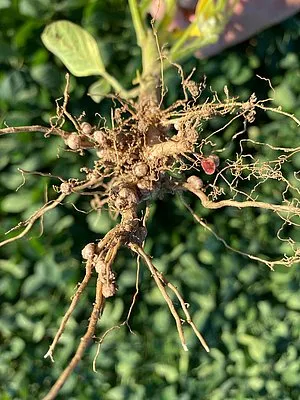
Researchers from the North Central Agricultural Research Laboratory of the USDA demonstrate that certain resistant soybean varieties recruit soil microorganisms capable of limiting the soybean cyst nematode (SCN), one of the most destructive pests of the crop. These microbial communities can then be transferred to other soils to protect sensitive varieties, paving the way for new protection strategies based on microbiome management.
Source: Agropages, published under the title "Soybeans recruit beneficial soil microbes to defend against ..." - 9 March 2026
Read more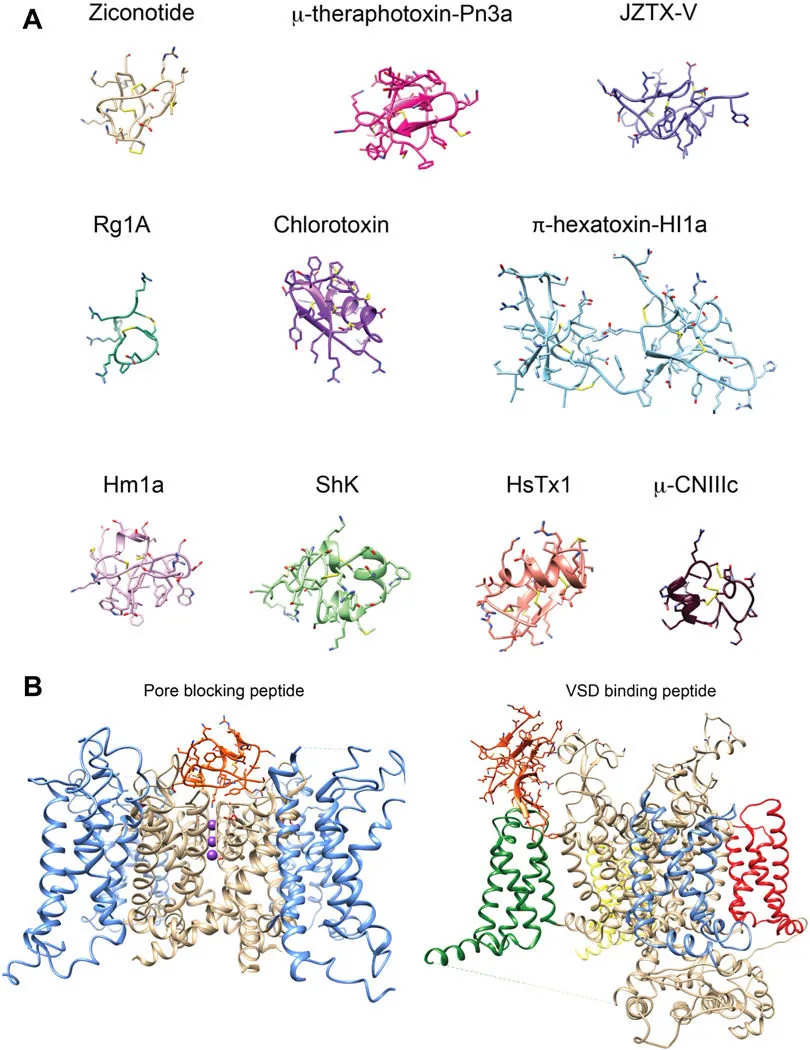
A study shows that peptide toxins targeting insect sodium channels can serve as a basis for new biopesticides. Researchers have resolved the structure of the NavPaS channel bound to two insect-selective toxins, Av3 and LqhαIT, using cryo-EM. With AI-assisted protein design tools, the insecticidal efficacy of LqhαIT has been doubled, paving the way for more targeted and potentially safer pest control agents.
Source: Agropages, published under the title "Structural insights into insect-selective sodium channel tox..." - 9 March 2026
Read more
A study published in Nature Plants by researchers from the University of California, Davis, and the Innovative Genomics Institute (UC Berkeley) highlights a gene editor that is more compact than CRISPR/Cas9, capable of making effective genetic modifications in tobacco. Based on an enzyme derived from 'jumping genes', this tool could accelerate plant breeding by enabling precise modifications without the insertion of foreign DNA.
Source: Agropages, published under the title "A pint-sized gene editor could expand precision breeding in ..." - 23 February 2026
Read more
Researchers from Aberystwyth University have identified specific traits of Miscanthus that could enhance carbon storage in soil, thereby contributing to the fight against climate change. This study, published in Frontiers in Plant Science, highlights the importance of low-lignin rhizomes and roots for optimizing carbon sequestration while maintaining high yields.
Source: Agropages, published under the title "Plant trait discovery could boost soil carbon storage" - 17 February 2026
Read more
A recent study shows that applying alkaline biochar in plantations exposed to acid rain can enhance nitrogen availability in the soil. After two years of experimentation, researchers observed an increase in pH and various nitrogen fractions, confirming biochar's potential as a lever for sustainable nutrient management in acid-stressed environments.
Source: Springer, published under the title "Biochar-driven biological regulation dominates acid-hydrolyz..." - 15 February 2026
Read more
In the face of climate change, variety selection must adapt to local conditions. An international team led by the German IPK Leibniz Institute of Plant Genetics and Crop Plant Research has developed a method using AI and big data to identify the winter wheat varieties best suited to each environment. By integrating phenotypic, genomic data, and climatic parameters, researchers have enhanced yield forecasts equivalent to twelve years of conventional selection.
Source: Agropages, published under the title "Improving predictions for 'tailor-made' wheat with AI and bi..." - 12 February 2026
Read more
A joint study by InVivo, Crédit Agricole, Sofiprotéol, and Unigrains reveals that the profitability of French farms could be maintained by 2050, provided that significant investments are made now. Presented at the InVivo congress, this roadmap aims to guide future agricultural policies in the face of climate change challenges.
Source: La France Agricole, published under the title "Changement climatique : « il y a une voie de passage » pour ..." - 11 February 2026
Read more
A study explores the effectiveness of calcium-modified biochar in adsorbing various organic phosphorus compounds, such as inositol hexaphosphate and ATP. The results reveal complex adsorption mechanisms, where electrostatic interactions and hydrogen bonding play a key role. Inositol hexaphosphate stands out for its high adsorption capacity, while the desorption of organic phosphates varies significantly. These findings highlight the importance of biochar in nutrient management and reducing environmental pollution.
Source: Springer, published under the title "Different adsorption of organic phosphorus on calcium modifi..." - 11 February 2026
Read more
A study by INRAE highlights the increasing unfavorable climatic conditions for wheat in France, predicting that up to 75% of growing seasons could be affected by the end of the century. The findings emphasize the importance of integrating structural climate risk into agricultural advice, prompting strategic adaptations such as varietal selection and planting management to confront this new reality.
Source: Agro Matin, published under the title "Blé : les années à risque pourraient devenir la norme" - 11 February 2026
Read moreA new approach using nitrogen biochar and zero-valent iron nanocomposites effectively degrades acetochlor in soil while protecting crop health. This method promotes the formation of iron plaques on roots, reducing pollutant absorption and increasing crop productivity, all while maintaining soil microbial diversity.
Source: Springer, published under the title "Novel multi-interface regulation of acetochlor fate in a soi..." - 11 February 2026
Read more