Anne BarratPublished on 22 September 2026
Mineral fertilizers today nourish nearly half of humanity, and nitrogen remains the primary lever for the yield of major crops. However, their production largely depends on natural gas, which has brought them back to the forefront as a strategic issue since the energy crisis of 2022. Not to mention their carbon footprint, which agribusiness industries are now seeking to reduce.
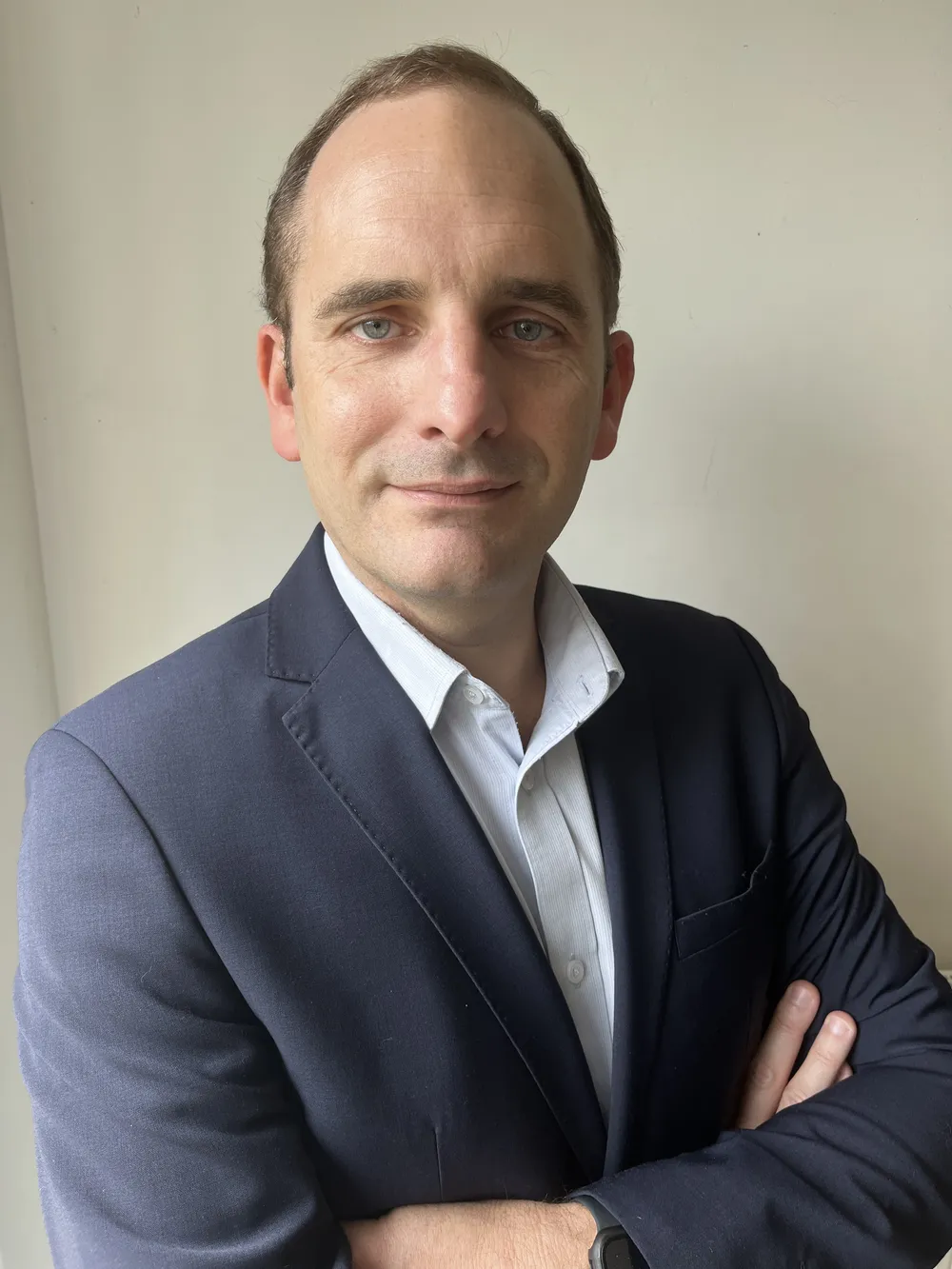
Solutions for decarbonizing fertilizers have long remained at the pilot stage. The startup of the largest CCS unit in Europe at Yara Sluiskil in the Netherlands changes the scale of these efforts. For Michael Lepelley, the focus then shifts downstream: the question is no longer "can we produce them?" but rather who in the supply chain will accept to pay the extra cost and direct carbon value to the consumer? The challenge, previously technological, becomes economic.
Bloom Agritech: You claim that low-carbon fertilizers are now available at scale. Why does 2026 mark a turning point?
Michael Lepelley: Decarbonization at our production sites is not a new topic at Yara, particularly with the implementation of DeN₂O catalysts, which have helped reduce greenhouse gas emissions by 45% globally between 2000 and 2015 and by 55% in France.
Until now, the reduction of emissions from the ammonia production process has led to testing pilots, and the commissioning of the CCS unit in 2026 marks a major milestone.
What does this leap in scale concretely represent?
Pilot projects previously represented only a few tons. With the CCS unit at our Sluiskil plant in the Netherlands, 800,000 tons of CO₂ per year will be captured, equivalent to the emissions of 174,000 cars annually. This is a change in scale with fertilizers available now for the 2026/27 campaign.
Before discussing low-carbon solutions, how is nitrogen fertilizer produced?
We start with nitrogen from the air — a gas that is available and the most abundant in the atmosphere, making up nearly 80%. However, a plant like wheat cannot absorb it directly: it must be transformed, which requires energy such as hydrogen, which allows this nitrogen to be fixed in the form of ammonia (NH₃). Two pathways then open up: reinjecting CO₂ to obtain urea – the world's first nitrogen fertilizer – or, more elaborately, producing nitric acid to make ammonium nitrate (NH₄NO₃), which does not contain carbon.
This has been Yara's mantra for over thirty years: ammonium nitrate, better absorbed by plants, more efficient, and the least CO₂ equivalent emitting form of nitrogen.
"Fertilizers were born decarbonized."
Is choosing ammonium nitrate enough to produce a decarbonized fertilizer?
No, not solely. This avoids the carbon embedded in the urea molecule, but that is only a small part of the problem. In conventional processes, most emissions occur upstream, in the extraction of the hydrogen molecule. Hydrogen is needed to fix nitrogen from the air in the form of ammonia, and today, this hydrogen is derived from natural gas, methane, through steam reforming: the gas molecule is broken down to extract hydrogen, which releases CO₂ into the atmosphere.
Transforming ammonia into urea does not eliminate these emissions: half of this CO₂ is reinjected into the urea molecule, but it is released later, in the field. The emission is therefore delayed, not reduced.
How can this hydrogen be produced differently?
Producing "green" hydrogen – the most virtuous form for the environment – involves decarbonized electricity (hydropower, wind, solar, or even nuclear) which, with electrolysis technology, breaks down the water molecule (H2O) to extract hydrogen. And for the record: this solution is nothing new. As early as 1905, the first nitrogen fertilizers were produced exactly this way, using hydropower as an energy source in Norway. Fertilizers were born decarbonized. Then gas became the overwhelmingly cheaper vector for hydrogen.
Today, gas can still account for up to about 90% of the cost of producing a ton of nitrogen. And its price varies significantly by region: between $15 and $30 per million BTU (energy measurement unit) in Europe, compared to $4 to $5 in the United States, and almost nothing in Russia.
If the technology dates back to 1905, why is green still so expensive?
To lower costs, production must occur at a large scale. Achieving this scale requires colossal investments, which no one will make until it is profitable. As long as we remain at the pilot project stage, we will not achieve economies of scale, and thus no cost reductions. Additionally, the operation: electrolysis requires green electricity, which must be purchased in bulk at a known price in advance. All these barriers must be unlocked one by one.
Yet we have proven that the technology works. Our renewable hydrogen plant inaugurated in 2024 in Herøya, Norway, an ideally located country with surplus regular electricity, produces several thousand tons using hydropower technology. What investor would commit in the current context?
"To lower costs, production must occur at a large scale. Achieving this scale requires colossal investments, which no one will make until it is profitable (...) What investor would commit in the current context?"
And the second pathway, the "blue"?
We continue to use natural gas, maintaining its industrial efficiency, but we capture the CO₂ produced during ammonia production. It is then liquefied, loaded onto ships twice a week, heading to Norway and the North Sea, where we have signed long-term storage contracts. Finally, it is injected 2,600 meters below the seabed. This is known as CCS, or carbon capture and storage. The sequestered CO₂ no longer counts in the product's emission factor.
How much does this extra cost represent, and on what price basis?
The extra cost of blue represents a few dozen euros per ton more than conventional. It is measured against the market reference product in Europe: ammonium nitrate with 27% nitrogen, the "CAN 27" (Calcium Ammonium Nitrate). The green, on the other hand, is more expensive.
Another difficulty: we are going through an energy crisis and an agricultural crisis in Europe. Input prices are very volatile and influenced by global geopolitics, and the harvests with the drought in Europe this summer have been disappointing, with grain prices still low.
What is your vision for the blue/green sharing by 2030?
At Yara, the majority of tonnage will be blue. Fertilizers produced with carbon capture and storage (CCS) are currently the best compromise: they maintain the industrial efficiency of gas and allow for large-scale production, while costing much less than fertilizers produced from renewable energies. Fertilizers based on renewable energy will remain reserved for sectors whose specifications or CSR ambitions require it – like our Swedish partner Lantmännen, which wanted bread without fossil energy: even if blue has the same carbon footprint, it does not fit into their philosophy. However, blue will never be free: capturing, liquefying, transporting, and storing CO₂ has a cost. It will always be slightly more expensive than gray.
"The additional cost of blue represents a few dozen euros per ton more than conventional (...) Blue will never be free: capturing, liquefying, transporting, and storing CO₂ has a cost. It will always be slightly more expensive than gray."
Let's talk about the downstream. For the farmer transitioning to low carbon, what does this change in practice?
Nothing, and that is precisely the point of the system with transparent and efficient traceability. The farmer receives exactly the same product, delivered by the same truck. The low carbon nature is not visible in the product: it relies on an accounting principle, the "mass balance." We guarantee that an equivalent amount of low carbon fertilizer has indeed been produced and entered into the circuit.
What changes is that a certificate accompanies it, attached to the delivery note: it certifies the reduction of emissions. This certificate is based on measurements verified by an independent auditor. For comparison, the production of a French ammonium nitrate emits an average of 3.97 kg of CO₂ per kilogram of nitrogen produced, according to the Gestim+ reference database. Our low carbon fertilizer, produced through carbon capture and storage (CCS), allows for a reduction of this footprint by up to 60%.
There remains a simple rule: the same gain can only be claimed once. Either this benefit goes up to the industrial sector – a chip manufacturer, for example – who records it in their balance sheet; or it stays with the farmer, who reduces the footprint of their operation accordingly. It’s one or the other, never both.
The supply chain is at the heart of your reasoning. Why?
A supply chain encompasses the entire value chain of a crop, from field to plate: the farmer, the cooperative, the processor, the brand, the consumer. And it is the key to everything. A low carbon fertilizer costs a little more; if the farmer pays for it alone, nothing changes. But if the supply chain organizes to trace, value, and reward this carbon benefit all the way through, the additional cost is shared and becomes a value.
The model already exists in biofuels: the law, for example, requires the incorporation of low carbon rapeseed oil into fuels. A farmer who sells their rapeseed for this sector thus receives an additional 25 to 40 euros per ton, depending on the levels observed in the market in 2025. This premium, originally paid by oil companies, is passed on to them by storage organizations and agricultural distributors who act as intermediaries.
"The same gain can only be claimed once. Either this benefit goes up to the industrial sector who records it in their balance sheet; or it stays with the farmer, who reduces the footprint of their operation accordingly. It’s one or the other, never both."
What should we ultimately remember?
Two messages, inseparable. First, low carbon fertilizers exist: they are available right now. Second, the entire chain must be organized – distributors, processors, agri-food industry – to finance this additional cost. Because, in the end, the one who pays is you and me.
I want to sell to citizens, not consumers. The low carbon aspect increases the price of a baguette by just a few cents. A citizen would pay that without flinching. A consumer, on the other hand, would naturally prefer the cheapest baguette. The whole challenge is to direct those cents to the farmer. Our job stops at the farm gate. Beyond that, everything depends on the supply chain: without it to trace low carbon and value its environmental benefits all the way to the consumer, decarbonization is just a communication argument.
"A supply chain encompasses the entire value chain of a crop, from field to plate: the farmer, the cooperative, the processor, the brand, the consumer (...) A low carbon fertilizer costs a little more; if the farmer pays for it alone, nothing changes."
Anne Barrat - 4 September 2026
14 August 2026
Anne Barrat - 12 August 2026