Anne BarratPublished on 24 September 2026

Since 2022, the war in Ukraine has reshuffled the cards of global wheat trade. Russia has gained market share, Ukraine has had to secure new export routes, and major importing countries, particularly in North Africa and the Middle East, remain heavily dependent on supplies from the Black Sea. In a market where the top ten exporters account for about 80% of global sales, every disruption can have repercussions far beyond the region.
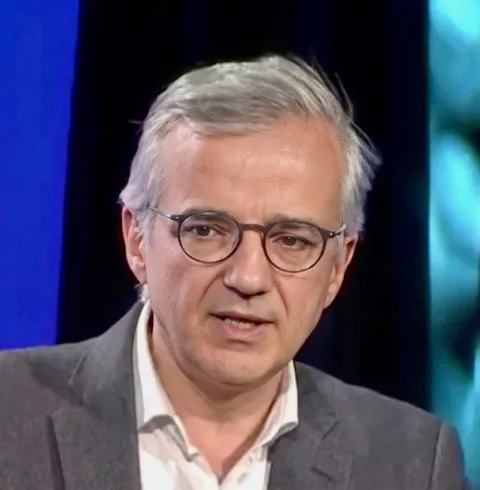
Director of studies at Agriculture Stratégies, a think tank dedicated to agricultural and food policies, Jérémy Denieulle works particularly on the geopolitics of agricultural commodities. His analysis is straightforward: a wheat market now accustomed to crises, to the point that, for the moment, it no longer reacts to tensions as it did in 2022.
Bloom Agritech: Strikes on ports, Hormuz blocked, El Niño announced: why are wheat prices not soaring like in 2022?
Jérémy Denieulle: It may seem contradictory: after good harvests, there is an abundance of wheat in Ukraine and Russia, but it struggled to leave this summer due to the escalation in the Black Sea. Then, the droughts this summer in the Northern Hemisphere impacted the production of major exporters like Europe, the United States, or Canada. I can only formulate hypotheses. First, North Africa had good harvests, particularly in Algeria and Morocco, thanks to good rainfall.
Also, market psychology has changed. In 2022, prices exploded on the day of the invasion: at that time, the slightest geopolitical event sent them into a frenzy. Today, attention is also focused on Hormuz and Bab el-Mandeb, where the Houthis have taken control of the strait without blocking it. Hotspots are multiplying, and the markets have eventually integrated this. I believe there is a before and after 2022: for the markets, geopolitics is no longer a variable; it is a constant that must be reckoned with.
In the Black Sea, strikes have resumed with renewed vigor this summer. What has changed since 2022?
The attacks target silos and ports on both sides: Ukraine has also struck the Russian port of Novorossiysk. This is not new. In 2022, Russia was betting on a lightning war: preventing Ukraine from exporting its grains was supposed to collapse its economy within weeks. But the balance of power has changed for good. In 2022, Moscow could impose a total blockade. Today, it is incapable of doing so: part of its Black Sea fleet has been destroyed, and Turkey prevents its warships from returning there, under the 1936 Montreux Convention. Ukraine was thus able to secure its exports without a UN corridor. It should be noted that, even if prices are not skyrocketing as they did in 2022, nearly a third of global wheat trade passes through the Black Sea, which remains a critical and vulnerable bottleneck.
"For the markets, geopolitics is no longer a variable; it is a constant."
What is Russia trying to achieve by striking merchant ships?
It wants to discourage shipowners from coming to load in Ukraine. It also wants to drive up insurance premiums, making Ukrainian exports more expensive. In 2022, Russia blocked. Today, it deters. It’s a war tactic: Ukrainian agricultural and agri-food exports are essential to its economy, and thus to its resilience against the invasion.
Should we fear a spike this year?
Rather than answering yes or no, let’s ask what could provoke one. I see three risks to closely monitor for the next harvest, and that’s already a lot. The first is the Black Sea, even though I believe neither belligerent has an interest in continuing the escalation there. The second is the Super El Niño expected in the fall. I am not a climatologist; climatologists themselves debate its effects, and the extent of its impacts is still uncertain. But it is expected to be long and intense, and should disrupt the climate especially in the Southern Hemisphere. There are major exporters like Argentina and Australia, which are particularly valuable as they harvest out of season, and large importers in Southeast Asia and Africa. The chain reactions could be numerous.
Global stocks are, however, high...
We need to be cautious with these stock figures. Certainly, they are high due to good harvests last year, but let’s keep in mind that China holds more than half of the world’s wheat stocks, and this wheat will never leave the country. So we should already deduct 50 to 60% from the displayed figure. Similarly, stocks exist in Russia and Ukraine, but they are currently partially blocked there: having reserves is not an end in itself if one is unable to use them. There is still a reason to be optimistic: in 2022, faced with a real shortage, the market was able to adapt, for example, with India exporting to East Africa. It still has some leeway.
And the third risk?
The blockage of the Strait of Hormuz, which has been ongoing since February. About 35% of the urea exported worldwide, the most widely used nitrogen fertilizer, passes through this strait. A significant portion of the gas used to produce fertilizers also comes from the Gulf. As early as March, I warned of the risk of a delayed crisis. For the last harvest, fertilizers had already been purchased. But if prices remain high for a long time, it will be the yields of the next harvest that will decline. In France, farmers have already left some fields fallow this year: with fertilizers so expensive, sowing wheat was no longer worthwhile. For importers, this could mean lower yields, poorer quality grains, and thus even more wheat to buy abroad. Hormuz is a delayed wheat crisis: it will play out in the fields next year.
Who really holds the market: exporters or importers?
Exporters, without hesitation. The imbalance is enormous. Every year, in a very stable manner, the top ten exporters account for about 80% of global sales. Purchases are much more dispersed: the top ten importers account for around 40%. Sellers can therefore largely impose their conditions. And since demand reacts little to prices, a buyer has few means to turn to other suppliers. Wheat is a market where sellers call the shots.
"Hormuz is a delayed wheat crisis: it will play out in the fields next year."
Why is Russian and Ukrainian wheat so competitive?
These are agricultural systems that have nothing to do with ours. They exploit vast areas inherited from Soviet collective farms. They have been reorganized on a capitalist model, with very strong public support. For Ukraine, exporting has been a way to regain its place in global trade and to finance state-building since the 1990s. For Russia, in the 2000s-2010s, wheat became a new source of income in addition to oil and gas, and a political lever. Add to this much lower production costs than in Western Europe or the United States, and especially the proximity of some major importers, like Egypt.
This weighs on the debate around Ukraine's entry into the European Union…
Yes. The Common Agricultural Policy (CAP) was designed for very different agricultural systems. Europe is already going through a crisis of internal competitiveness: France is losing market share to Eastern European countries. With Ukraine, the problem changes scale.
Which countries are the most dependent on imported wheat?
Egypt, the world's largest wheat importer, sometimes neck-and-neck with Indonesia. Its leaders constantly monitor the price of wheat because everything depends on it, including the state budget: wheat is bought in dollars, and the country chronically lacks foreign currency. Geography matters: Egypt faces the Black Sea. Since the early 2000s, Russian and then Ukrainian wheat has taken up more and more space there. On the eve of the war, it accounted for about 80% of Egyptian imports, and it still does. Egypt is the top client of both Russia and Ukraine.
Is this dependence a political choice?
It is not a political choice that made Egypt 80% dependent on the Black Sea, but the nature of the bidding process. The Egyptian public buyer, GASC (General Authority For Supply Commodities), would issue tenders: "In six months, I want so many thousands of tons, send your proposals." Everyone would respond, with French, Russian, or other wheat, and the cheapest would win. Black Sea wheat, unbeatable on price and transport, won almost every time.
What has changed since then?
In 2024, an event occurred that shook the grain markets, without making headlines in the mainstream press. GASC had existed since 1968 and imported just over half of Egypt's wheat, making it the world's largest single wheat buyer. Overnight, the government removed wheat purchases from it and entrusted them to an agency linked to the air force, Mostakbal Misr (Future of Egypt). This may be surprising, but since 2013, the military has been in power in Egypt and controls a large part of the economy.
In my opinion, the state wanted to abandon public tenders to negotiate privately, in secret. The idea was to discuss prices and volumes directly with Russian exporters, to take advantage of market instability. The result is rather poor: many Russian exporters complain about the incompetence of the new buyer, and the market is disorganized. This is a sign of a country deeply shaken by 2022.
Algeria is also a very large importer…
It remains among the top five global importers. A few years ago, it was France that supplied it. Here too, it is the state that buys directly, because wheat and the availability of cheap bread condition the stability of the country. This is true throughout the region, from North Africa to the Middle East: states play a heavy role in the wheat trade and in the bread sector, often subsidized. In the Maghreb and Mashreq, subsidizing bread is buying political stability.
Can these countries reduce their dependence?
It is extremely difficult, as a diet cannot be changed overnight. North Africa and the Middle East have, by far, the highest per capita wheat consumption in the world. These countries know that it is not sustainable, especially for their finances. The cheap wheat of the 1980s-90s is long gone, and since the early 2000s, crises have followed one another: the food riots of 2007-2008, the Arab Spring of 2011, Covid, and then 2022. They have tried to reserve subsidies for the poorest, but the issue is explosive. When Sadat wanted to significantly reduce food subsidies in 1977, he triggered deadly riots that remain very present in the Egyptian collective memory.
"In the Maghreb and Mashreq, subsidizing bread is buying political stability."
And in sub-Saharan Africa?
Nigeria, often in the top 10 of importers, has tried several times to do without imported wheat by promoting local cereals or cassava. These attempts have always failed, first because consumers did not follow. There is also the weight of past choices: a milling industry developed in the 1970s thanks to imported wheat. It weighs economically and politically, and it has every interest in keeping imports going.
In light of tensions in the Black Sea, does Russia have alternatives?
It has already been doing so since this summer, by routing some of its wheat through its northern ports. But this remains very limited: these ports are already saturated and cannot absorb the usual volumes from the Black Sea. And delivering to North Africa from up there costs much more. Russia is therefore losing its price advantage, and this is one more reason for it not to let the situation drag on.
And Ukraine?
For it, alternative solutions are almost non-existent. In 2022, some grain was transported by truck via Poland, which angered Polish farmers, making overland transport politically very costly. These routes are difficult to reopen. The river ports, further from Odessa, are already operating at full capacity and are now targeted by Russian drones. For Ukraine, there is no plan B to the Black Sea.
Since 2022, wheat has often been presented as a weapon of war. Is this the right term?
I would rather say it is "arsenalized." Wheat is not a weapon by nature: it becomes one through the way it is used. It is the most traded cereal in the world. It is at the heart of human nutrition in many regions, especially in North Africa and the Middle East, and thus has a very high political value. Russia has not invented anything, but today it is the one using it the most. The Kremlin even openly admits it: for them, wheat is a diplomatic weapon just like oil.
"Wheat is not a weapon by nature. It becomes one through the way it is used."
How does this translate into concrete terms?
In several ways. During the year that the UN grain corridor in the Black Sea lasted, Moscow threatened several times to withdraw if the sanctions related to SWIFT were not eased. It had the means: the world's largest exporter since 2016, it is very present in African markets, which are among the most dependent on imported wheat. In 2023-2024, the Kremlin also offered wheat to six African countries, among the closest to its positions.
There was also outright theft. From the first months of the war, the Russian army seized the harvests of farmers in the occupied territories, and the BBC documented this very well. These "phantom grains" escaped all statistics. They went to Crimea and were then re-exported from Sevastopol to allies like Bashar al-Assad's Syria, at unbeatable prices since they had cost nothing.
Is Russia the only one playing this card?
No, and it is important to remember that. Since 1945, the United States has often used its wheat as a diplomatic weapon. During the Cold War, they imposed embargoes on countries that refused to align: their strategy of containment of the USSR clearly aligned with the map of U.S. food aid. Egypt paid the price when it leaned too much towards the Soviet side. It is the politics of the stomach. Ultimately, more than a weapon of war, wheat is today a hostage of conflicts.
Could wheat influence the outcome of the conflict?
I doubt it. Since 2022, Russia has rather gained ground on wheat: it has taken market shares from Ukraine, established itself in new African countries, and strengthened its diplomatic and economic presence there. However, wheat can bring both sides to the negotiating table, without necessarily leading to peace. The establishment of the grain corridor in 2022 was one of the very rare moments when Russia and Ukraine negotiated directly.
Neither has an interest in the Black Sea remaining so explosive. Both economies are suffering, although Ukraine is suffering much more. And Russia has diplomatic ambitions, particularly in Africa, which prevent it from blocking for too long. Presenting itself as a guarantor of global food security while blocking one of the world's granaries is an untenable position. African leaders pointed this out to it as early as 2022. Wheat will not end the war. But it can bring Moscow and Kiev back to the negotiating table.
"The wheat trade tells the story of the fragmentation of the world."
Are we witnessing a dedollarization of the wheat trade?
This is a real question. Egypt's shift to spot trading also serves to exit dollar markets. The most vulnerable importers are those who do not export energy, like Egypt, unlike Algeria. They often lack dollars to buy their wheat. They therefore have an interest in getting closer to a sanctioned Russia, which is also hindered in using the dollar, and to pay in other currencies. China is going in the same direction with its Silk Roads: a railway line via the Zabaikalsk terminal is supposed to allow Russia to sell wheat directly to it, and these exchanges will not be conducted in dollars. Beijing even highlights this. This says a lot about the fragmentation of the world: more and more actors have an interest in bypassing the major global markets that have been functioning for fifty years. The wheat trade tells the story of the fragmentation of the world.
Anne Barrat - 4 September 2026

Anne Barrat - 12 August 2026

Anne Barrat - 12 August 2026