Anne BarratPublished on 12 August 2026
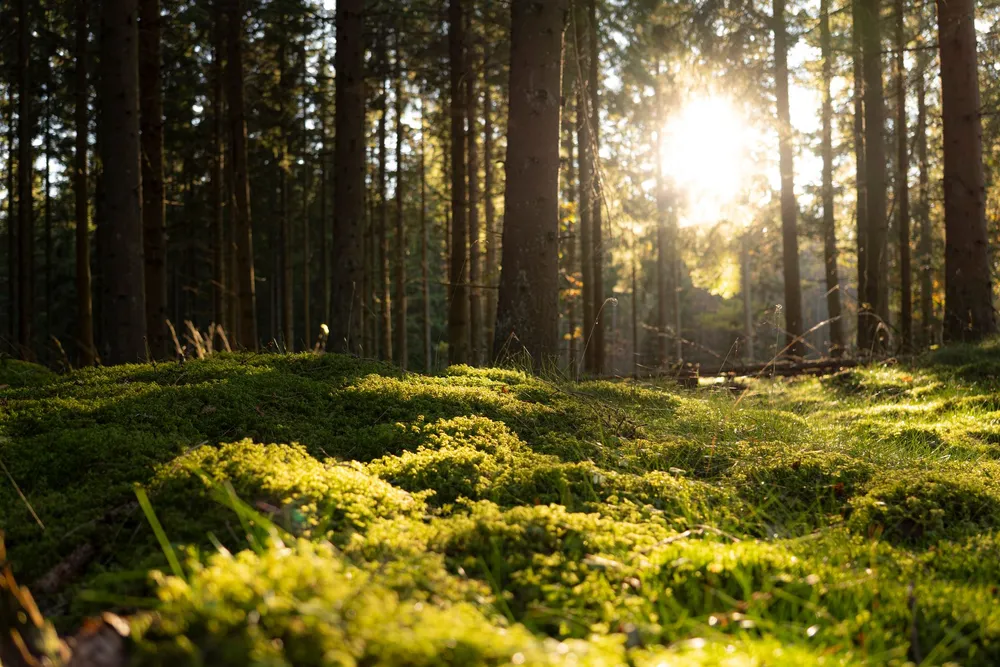
They do not have the same background, nor the same practices, nor quite the same vocabulary. But they share a common conviction: the future of forests depends on their management. Michel de Vasselot, a forestry expert for over half a century, is the Secretary General of the Forest Committee, a union that manages one hundred and fifty thousand hectares for five thousand owners. Benoît Méheux, a forest manager and permanent member of the Pro Silva France association, leads a European network of foresters from Nancy who confront their practices. Finally, Benno Schmid, spokesperson for ForêtSuisse, which unites all Swiss forest owners – 245,000 private and about 5,000 public entities – observes from the other side of the Jura a massif managed contrary to French habits. Three perspectives on the same challenge: ensuring the longevity of forests in a changing climate.
On one point, none of them compromise: clear-cutting, which strips an entire plot bare in one go, is a dead end. Michel de Vasselot dismantles its economic rationale. An owner cuts down a beautiful oak grove and pockets a considerable sum: "80,000 euros laid down in one go," he calculates, from which each intermediary takes their share. The problem lies in the time horizon: reconstituting such trees will take nearly a century and a half, a timeline that does not sit well with pressing interests.
Benoît Méheux extends the diagnosis to the field of biology. Simplifying an ecosystem weakens it: a stand that is too homogeneous, "with all the trees at the same height, risks becoming a house of cards, everything collapses at once." He observed this as early as 2019 in northeastern France, where bark beetles ravaged plots of pure spruce "lost entirely." Monoculture, he adds, also ignites faster: "pure pine plantations without a mix of broadleaves tend to facilitate the spread of fire." Nursery grower Vincent Brunet, another voice in this series, raises the same concern about the large Landes forests.
In opposition to clear-cutting, the three men advocate the same school: irregular high forest with continuous cover. The principle: never expose the soil, only harvest the largest trees, and let the forest reseed itself. Michel de Vasselot has made this a philosophy, which he summarizes with a domestic image. The forest is a funnel that pours out a fixed amount of wood each year; it is up to the forester to open the tap judiciously. "If you manage to take only what God gives you every year, your forest is in balance. Because wood only grows by 2% a year: promising more, he warns, amounts to 'decapitalizing.'"
He describes a stand of irregular high forest as a society with three layers: "the nursery, the seedlings; the producers, at the top; and the sprinters, who move between the others." Benoît Méheux defends the same complexity, both structural and vegetative: "Not all trees should be the same. To maintain a continuous capacity for adaptation of stands, it is preferable to have trees of various species, sizes, and shapes." Both celebrate the most precious resource because it is free: natural regeneration, "which is no small thing in a world where money is scarce," observes the latter. This is also, very precisely, the Swiss model.
Here, sensitivities diverge. Michel de Vasselot does not believe in it much: the French forest already possesses, he estimates, everything it needs, and the oak will know how to adapt – some varieties, carrying the genes of the pubescent oak, already resist drought better. He is wary of the most alarming announcements about the disappearance of endemic species, which he considers premature.
For Benoît Méheux, the question of "which species to invest in is essential as long as it includes the way to plant in a mix with the natural renewal of the forest. He advocates for a gradual assisted migration: densifying already present but rare species, like the service tree; moving maritime pine or southern oaks northward; and cautiously attempting the Atlas cedar where the soil permits. Cautiously, because failures mark the path: late frosts in Haute-Ardèche, mineral deficiencies elsewhere, ....
In Switzerland, Benno Schmid already observes the shift underway, without anyone having decided it. "It is getting hotter: it is too hot for spruces, which are moving up towards the Alps; on the Plateau, between Zurich and Geneva, they are retreating in favor of broadleaves." A shift that penalizes owners, as "broadleaf wood is worth less than that of conifers." Vincent Brunet, also interviewed in this special report (here), takes this reasoning further: "In a century or two, today's oaks will have given way to others, coming from Mexico or the Caucasus."
From one generation to the next, trust thus shifts from the tree's capacity to adapt to the necessity of preparing successors for it.
There remains the obstacle that no one can circumvent: the forest yields little, and slowly. In France, the difficulty is primarily structural. Three-quarters of the massif is private, fragmented into properties of three or four hectares that inherit further divide. "We should do like in some countries where the forest goes to a single heir, without inheritance rights. But the Napoleonic code no longer allows it, laments Michel de Vasselot." He also criticizes an overly finicky administration: the management plans imposed on owners become, in his eyes, "telephone directories that no one reads."
Switzerland offers a perfect counter-example. No management plan is imposed: "we do have a forest code, clarifies Benno Schmid, spokesperson for ForêtSuisse, but it leaves the owner entirely free: nothing obliges them to intervene, to cut, or even to establish a management plan." The result: "too many private owners do nothing, and that is not good, because forests need to be cared for to rejuvenate."
On one side of the Jura, a regulation so burdensome that it discourages; on the other, a freedom that leaves forests abandoned. In both countries, the same question remains: how to encourage millions of small owners to manage their forest? For Benno Schmid, the answer is primarily economic: "wood cutting does not bring in money: the price is far too low." Due to lack of profitability, extractions are becoming rarer and the forest is almost entirely renewed through natural rejuvenation: "In Switzerland, we hardly plant at all." A sober model, but one that is endured, which Benno Schmid would like to see evolve: "for the future, we will have to do better: if we really want to rejuvenate forests, we will have to do more." A commission convened in early 2026 to set an acceptable wood price is stalling, as owners and sawyers cannot agree.
A final piece of data challenges preconceived notions. In Switzerland, nearly 70% of forests are public. However, this average masks significant disparities: "In some cantons, 10% of forests are private; in others, 90%," specifies Benno Schmid. In any case, management depends on the cantons and their Conference of Forest Inspectors. And the spokesperson concludes: "public owners take better care of forests than private ones, whose plots, often less than one hectare, are passed down within families without almost ever being exchanged – just like in France." Public ownership does not guarantee everything, but it allows for more active forest management. Erwan Le Méné, another expert interviewed for this special report (here), goes further: "neither private nor public ownership alone guarantees the health of forests; it all depends on their management."
A final shadow, which Benoît Méheux is the only one to insist on naming: game. Deer, roe deer, and wild boars devour young shoots before they can grow, and "there remains a group of actors difficult to mobilize on the issue of adapting forests to climate change through forestry: hunters." Without regulation, even the most beautiful natural regeneration remains a dead letter.
From Nancy to the Swiss forests, a shared conviction emerges: the forest of tomorrow will depend less on a catalog of miracle species than on a way of doing things — mixing, layering, taking little, allowing nature to reseed itself, and accepting to work for a harvest that one will not see. "Fifty-two years in the profession, and I still know nothing," slips Michel de Vasselot. One must have the humility to recognize that we know nothing." For a forest that thinks in centuries, this may be the beginning of wisdom.

Anne Barrat - 25 September 2026
Michel J. F. Dubois - 25 September 2026
Anne Barrat - 24 September 2026