Anne BarratPublished on 4 September 2026
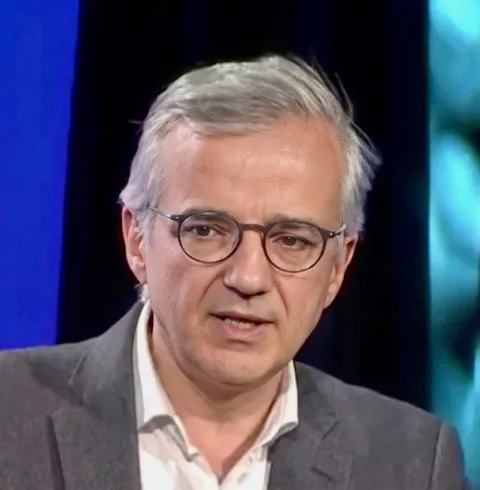
Professor of economics at Paris-Dauphine University and director of the Center for Geopolitics of Energy and Raw Materials (CGEMP), Patrice Geoffron supports the sugar, rapeseed, and wine sectors. For Bloom Agritech, he analyzes the consequences of the geopolitical crisis on European plant sectors, including the surge in energy costs, supply vulnerabilities, and the new risk premium surrounding Hormuz, as well as the prospects for easing starting in 2027.
Bloom Agritech: In the current geopolitical context, what are your perspectives on the evolution of agricultural prices?
Patrice Geoffron: The question of instability, and even more so that of the unpredictability of agricultural prices, is obviously a major concern for the sectors I support, because they have energy outlets – sugar, wine, rapeseed. It seems to me that the current period is characterized by a double uncertainty, with both terms overlapping while being interdependent.
The first is the lasting consequences and persistent threats of the war in Ukraine. Ships carrying grain have recently been attacked in the Black Sea. We are faced with two protagonists in a conflict who are also two important agricultural producers, and the fact that pressures on agricultural supply are now part of the modalities of war is becoming normalized.
"The break is that Iran has demonstrated that it does not need the atomic bomb."
The second is the situation in the Middle East. The mechanism is the same as in the Black Sea: supply has become a means of pressure. Except that it is exercised here on energy raw materials, and therefore, mechanically, on fertilizers, which are derivatives of these. What strikes energy strikes fertilizers.
How does the Hormuz crisis constitute a break?
The break is that Iran has demonstrated that it does not need the atomic bomb. Schematically: it already holds the atomic bomb – it is its ability to exert pressure on the Strait of Hormuz, indiscriminately on what enters and what exits, with perhaps a preference for oil and gas.
The real problem is that it takes very little to establish the threat. Hitting a ship from afar is enough: in London, Lloyd's or its counterparts announce that they no longer insure, and the bulk of the flow stops.
"The break is that Iran has demonstrated that it does not need the atomic bomb."
Is this second front, and the energy shock it induces, what worries you the most?
No. The great difficulty for European agricultural sectors will be the accumulation of the energy shock and the effects of drought, which, although quite heterogeneous in Europe, are nonetheless of historic magnitude, along with heat waves and massive wildfires. It is especially the combination of these phenomena that poses a problem, as they are largely uninsurable or very poorly covered.
We are at the heart of this debate in France right now: the capacity of a state with very high public debt to invoke national solidarity, in a context where the needs of agriculture are pressing and urgent.
You anticipate a relaxation of energy prices in 2027. Should we conclude that an agreement in the Middle East would close the chapter opened by the Hormuz crisis?
No, because a lasting effect is added to it. The crisis may pass, but the risk will remain. The risk of closing Hormuz has been identified for decades, but it had never materialized. It has now, and the terms of an agreement that would allow a return to the previous situation, where all goods circulated in and out, are very difficult to imagine.
There will therefore remain at least a risk premium on the area, with the full awareness that sourcing from the Middle East exposes one more than buying the same raw material elsewhere. There may also be tolls and transit costs added. And as long as the risk remains durably higher, marine insurances will cost more than they would have in the stable environment that prevailed until now.
"The crisis may pass, but the risk will remain."
Is this risk premium already having effects on fertilizer supplies?
It first produces a transitional effect, the one we are observing. The backlog accumulated in 2026 could thus have consequences in 2027, even if it would be risky to measure its extent today.
Are the ongoing diversions, particularly Emirati pipelines and Iraqi projects, able to reduce this vulnerability?
They mechanically reduce the tension on the strait itself, even if their deployment will take time. But the threat is not confined to the strait: Iran has shown its ability to project drones over long distances, and a drone is enough to damage a refinery, a liquefaction plant, or a pipeline. If the conflict were to persist, the entire area would be under threat.
The other difficulty is that the main alternative route, the pipeline that crosses Saudi Arabia from east to west, ends up in the Red Sea, at the Bab el-Mandeb strait, controlled by the Houthis. From a port in the Red Sea, Europe remains accessible by moving north towards the Suez Canal: from this side, the obstruction plays little role. But the share destined for Asia must, in turn, go back south and cross Bab el-Mandeb, or, if this passage is deemed too risky, go around Africa. The detour adds several weeks and, according to circulating figures, from $500,000 to $1 million per ship, with an effect on global prices.
The barrel fluctuated between $69 and $105 in the month of July alone. Should we now learn to live with such volatility?
The price of the barrel reflects an absolute geopolitical fog. The Iranians claim to control the strait, Donald Trump claims that the United States controls it and that it will become an American possession… an accumulation of bluffs. The range of uncertainty is therefore immense, from $70 to $120, and perhaps beyond.
Do you expect a relaxation in 2027?
Yes, that is my central scenario: an agreement in the Middle East in the coming months. An intuition, not a forecast. Both Tehran and Washington need the standoff to end. The Iranian economy is drained: over 100% inflation, even more on food prices, infrastructure destroyed for several hundred billion dollars. This is not a country in a position to hold its breath for years.
As for the United States, the Trump administration cannot approach the midterms with a pump price that is a third higher: the gallon was supposed to return to $2, but it has risen to $4.50. I find it hard to imagine that you will call me back in January and we will be in the same situation.
Beyond the yo-yo of 2026, it is quite plausible that in 2027 crude oil will return to a low price regime. The barrel was at $65 in 2025, and forecasts for 2026, without the war, were based on less than $60. Global demand will be weak, and many producers need to produce more to repair the damage.
"It is quite plausible that in 2027 crude oil will return to a low price regime."
And what about gas, which a large part of fertilizers depend on?
In Europe, the winter looks difficult: we are filling stocks more slowly, later, and at higher prices. Additionally, Qatar has seen some of its infrastructure damaged since the beginning of the conflict in March. The threat is serious for this winter. Beyond that, we should see a regime of liquefied natural gas influx, even more abundant if the Emirates realize their exploitation and export plans.
How can we quantify the impact of this gas price on agriculture?
The answer is not straightforward: it depends, case by case, on the contracts. I work for a sugar producer who is not very worried because he has good coverage against this type of risk and because there are mechanisms to pass the shock on to the final customer. He is therefore approaching winter with serenity.
Should we expect inflation in sugar prices?
Mechanically, yes. But Europe remains in a regime of very moderate inflation, particularly because growth is weak there. One should not expect a rise comparable to that of Covid – this is also, I believe, the reading of the European Central Bank. In the worst case, we will not stray far from the 2% that constitutes its target.
In the meantime, where will farms concretely pay the bill?
On agricultural prices themselves, I would not venture. That said, several energy-related items will increase: fertilizers, which largely depend on gas, but also non-road diesel and gas used on farms. Production costs will therefore rise and, quite mechanically, exert upward pressure on prices.
I cannot say to what extent, but this pressure will play out in any case in 2026 and during the winter of 2026-2027, since the gas consumed then will have been purchased in 2026. Beyond that, we can hope for a turnaround: if my central scenario, that of an agreement in the Middle East, materializes, we will see an influx of oil and gas, and a lower gas price in 2027. It would not be a great surprise: this is what we experienced in 2025 and what we anticipated for 2026 before the conflict.
Does the Russo-Ukrainian aspect also weigh on non-road diesel?
Directly, because we are dealing with a war of energy infrastructures: as soon as the Hormuz conflict broke out, the Ukrainians increased pressure on Russian refining and export capacities, forcing Moscow to ban the export of its diesel. This diesel was not going to Europe, which has been under embargo since the beginning of 2023, but it fed the global market and helped contain the price of diesel.
Hence, diesel prices reach €2.50 per liter on highways in some places, and, above all, diesel is significantly more expensive than gasoline, an inversion that is not neutral for an agricultural world that runs on diesel. The Ukrainians have identified a vulnerability in the Russian economy here, and they are focusing their efforts on it.
"If my central scenario materializes, an agreement in the Middle East in the coming months, we will see an influx of oil and gas, and a lower gas price in 2027."
If this exposure to gas prices is to last, are the sectors you support looking to free themselves from it? What is within their reach, and what is still a matter of forecasting?
On rapeseed, it was about working with the sector to enhance the energy value of part of its production. The plant is relatively resilient to the effects of climate change, and the question is more prosaic: it depends on the assumptions of fossil price variation.
On sugar, I am conducting long-term work with Cristal Union, aimed at enhancing their decarbonization efforts. Sugar production is very energy-intensive and potentially very emissions-intensive: sugar sites are among the top 50 industrial emitters in France. Within their reach is the transition from gas to biomass and the electrification of certain processes. However, the small modular nuclear reactor attached to the site, which would provide both electricity and heat, is still a matter of forecasting: the horizon is set after 2035 or 2040, on technologies that are not mature. We have worked on this with sociologists to assess to what extent such an installation would be accepted in a rural area of Eastern France.
In the short term, sectors will therefore have to absorb the shock; in the longer term, reduce their dependence on an energy that Hormuz has just reminded us will remain durably exposed to geopolitical risk.

Anne Barrat - 25 September 2026

Michel J. F. Dubois - 25 September 2026

Anne Barrat - 24 September 2026