Sandrine Doppler, Éric Sargiacomo, Frédéric CourleuxPublished on 5 October 2026
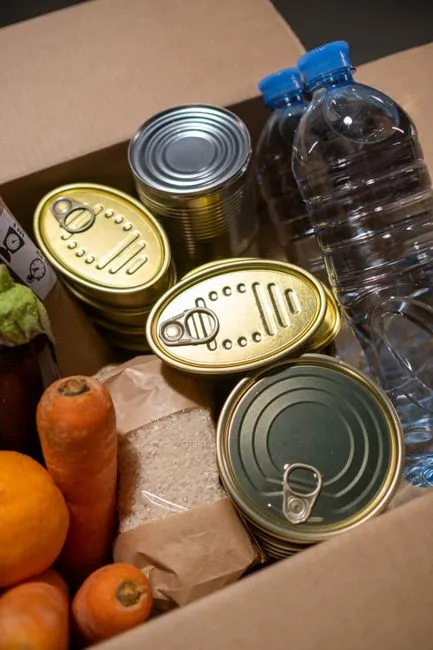
In July 2026, in the face of wildfires, France quickly obtained Croatian Canadairs and two heavy helicopters, one Czech and the other Slovak: we know how to organize reinforcements against fire; we have not yet prepared a comparable capacity for food continuity. The war in Ukraine, the pandemic, drought, maritime tensions: the certainty of a supply guaranteed solely by the fluidity of exchanges has cracked, yet the debate remains locked in an accounting question, that of the number of tons to be stored.
A stock is not strategic simply because it exists. It becomes strategic when it can be located, moved, transformed, and distributed in time. The ORSEC system already organizes emergency preparation and supply, without constituting a permanent doctrine for food continuity on its own. This note proposes to build a civil food security, modeled on the fight against fires and the European instruments HERA and rescEU.
Create a permanent European capacity for food crisis preparedness. Draw inspiration from HERA to anticipate and contract capacities, and from rescEU to prepare for their deployment as a last resort. This is not just another agency. It is a function: to map critical dependencies (imports, fertilizers, ports, cold storage, energy, drivers, packaging) and organize joint purchases.
Combine a limited physical reserve, rotating stocks, and contracted capacities. Goods continue to circulate in commercial chains; public authorities buy less the ownership of products than a guarantee of priority access. Availability contracts with manufacturers, cooperatives, distributors, and logistics providers reserve activatable production lines, priority volumes, and means of transport. The guiding principle is "dual use by design": capabilities designed for dual use, to serve the market in normal times and populations in times of crisis.
Clarify the chain of responsibility. The note proposes that Europe anticipates and mutualizes, that the state sets the doctrine and arbitrates transfers between territories, that the prefect commands in crisis, that the region plans and contracts, and that the municipality distributes. Requisition, compensation for operators, control of declared volumes: everything must be decided before the crisis, not during.
Establish interregional food reinforcement columns. Pre-positioned modules (vehicles, drivers, cold storage, generators, mobile kitchens, distribution teams) mobilized in tiers: region, neighboring regions, state, Europe. Food banks and cooperatives are associated with this, equipped to operate in degraded mode and integrated into full-scale exercises.
Incorporate food continuity into the CAP reform and open its funding pathways. Integrate strategic stocks and planning into the Common Market Organization (CMO), and propose to mobilize the future European Competitiveness Fund for the storage of goods and inputs (seeds, fertilizers, animal feed supplements). The system must also provide for the reactivation of producers, processors, and infrastructure in the affected territory.
A stock that does not circulate is not a strategic reserve. It is an inventory waiting for its next crisis.
"We know how to organize solidarity against fire. Why should we not be able to organize it for food?": https://www.jean-jaures.org/publication/apres-le-feu-pour-une-doctrine-francaise-de-securite-alimentaire-face-aux-crises-systemiques/
Anne Barrat - 29 September 2026
14 August 2026
Bernard Valluis - 17 July 2026