The Formoso Group, a major player in seed production in Brazil, has filed for judicial protection due to colossal debts. A court has suspended legal actions against the group for 90 days, allowing it to restructure its operations. This situation highlights the growing challenges faced by Brazilian farmers, exacerbated by adverse weather conditions and rising operational costs.
Source: Agropages, published under the title "Brazil - Grupo Formoso, Uniggel Sementes owner, files for ba..." - 5 February 2026
Read more
According to an analysis by RaboResearch, the Brazilian crop protection market is expected to exceed 20 billion US dollars by 2025, with growth of approximately 1.5% in volume and 1.0% in value. Similar growth is anticipated for 2026, although recovery remains hindered by financial pressures on farmers and increased competition from new entrants, particularly from China, in the market.
Source: Agropages, published under the title "Rabobank projects recovery in Brazilian crop protection mark..." - 2 February 2026
Read more
Regulatory reforms in Mexico and Brazil are transforming pesticide and fertilizer management, with strategic implications for businesses. Mexico has implemented regulations aimed at streamlining approval processes, while Brazil is considering major changes that could redefine registration and risk substance management requirements. Companies must prepare for these changes to ensure compliance and optimize market access.
Source: Agropages, published under the title "2026 LATAM agrochemical regulatory outlook: Mexico and Brazi..." - 2 February 2026
Read more
The century-old Brazilian company Wolf Sementes, specializing in the production and export of pasture seeds, launches Mavuno Grafitek®, a new version of its hybrid Brachiaria. With an exclusive natural graphite coating, these seeds provide optimal flow in drone and planter dispensers. This technology prevents blockages and ensures remarkably precise sowing for perfectly uniform ground coverage.
Source: Agropages, published under the title "Wolf Sementes launches polymer-free coated hybrid Mavuno Gra..." - 20 January 2026
Read more
Biome Delta and Quantified Sensor Technology have teamed up to launch a wireless monitoring system for greenhouses in North America. This technology accurately measures climate and irrigation to help producers optimize their resources and yields through simplified installation on existing equipment.
SEPEHR ACHARD, Source: Igronews, published under the title "Biome Delta Partners With Quantified to Expand Wireless Gree..." - 20 January 2026
Read more
Solubio solidifies its position as a key player in biological inputs in Brazil following its restructuring under Aqua Capital's management. Its microalgae platform, which enhances crop resilience, is experiencing significant expansion, with projected sales of 15 million R$ this year.
Source: Agropages, published under the title "Brazilian Solubio returns to growth, expands microalgae plat..." - 20 January 2026
Read more
Presented at DINETEC, Brazil's leading event for innovation in large-scale agriculture, FMC Corporation's Sofero™ Fall technology leverages specific pheromones of Spodoptera frugiperda combined with microencapsulation to extend their effectiveness. Integrated into existing programs and paired with the Arc™ digital platform, this targeted approach is compatible with beneficials, allowing for anticipation of pest pressures and achieving significant yield gains in trials conducted in Brazil.
Source: Agropages, published under the title "FMC unveils first pheromone-based FAW management technology ..." - 16 January 2026
Read more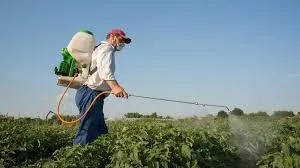
In 2025, Brazil's phytosanitary regulatory system accelerated the registration of pesticides, the development of bioinputs, and phytosanitary monitoring. The digitalization of processes and data integration have improved product diversity while maintaining safety standards.
Source: Agropages, published under the title "Brazilian crop protection matures in 2025, says former regul..." - 15 January 2026
Read more
In 2025, Brazil recorded unprecedented fertilizer imports at 44.96 million tons, marking a 2.9% increase from the previous year. This trend is driven by farmers' strategies to cut production costs by favoring low-concentration fertilizers, such as ammonium sulfate and single superphosphate. The implications of this shift are significant, both agronomically and logistically, as farmers must adjust their application volumes to meet required fertilization levels. Challenging economic conditions and international market dynamics will continue to influence purchasing decisions in 2026.
Source: Agropages, published under the title "Brazil's fertilizer imports hits record in 2025 as lower-gra..." - 15 January 2026
Read more
As 2026 approaches, the Brazilian agrifood sector stands at a historic crossroads, where risk management and innovation take precedence over mere production increases. With a projected gross production value of R$1.6 trillion, producers must navigate a landscape of volatile costs and complex regulations. Margins are tightening, and managerial excellence is emphasized to ensure profitability. Geopolitical tensions, particularly with China, add a layer of complexity, making traceability and sustainability essential to remain competitive in the global market.
Source: Agropages, published under the title "Brazilian agribusiness perspective 2026: From productive pow..." - 13 January 2026
Read more