Anne BarratPublished on 17 November 2025
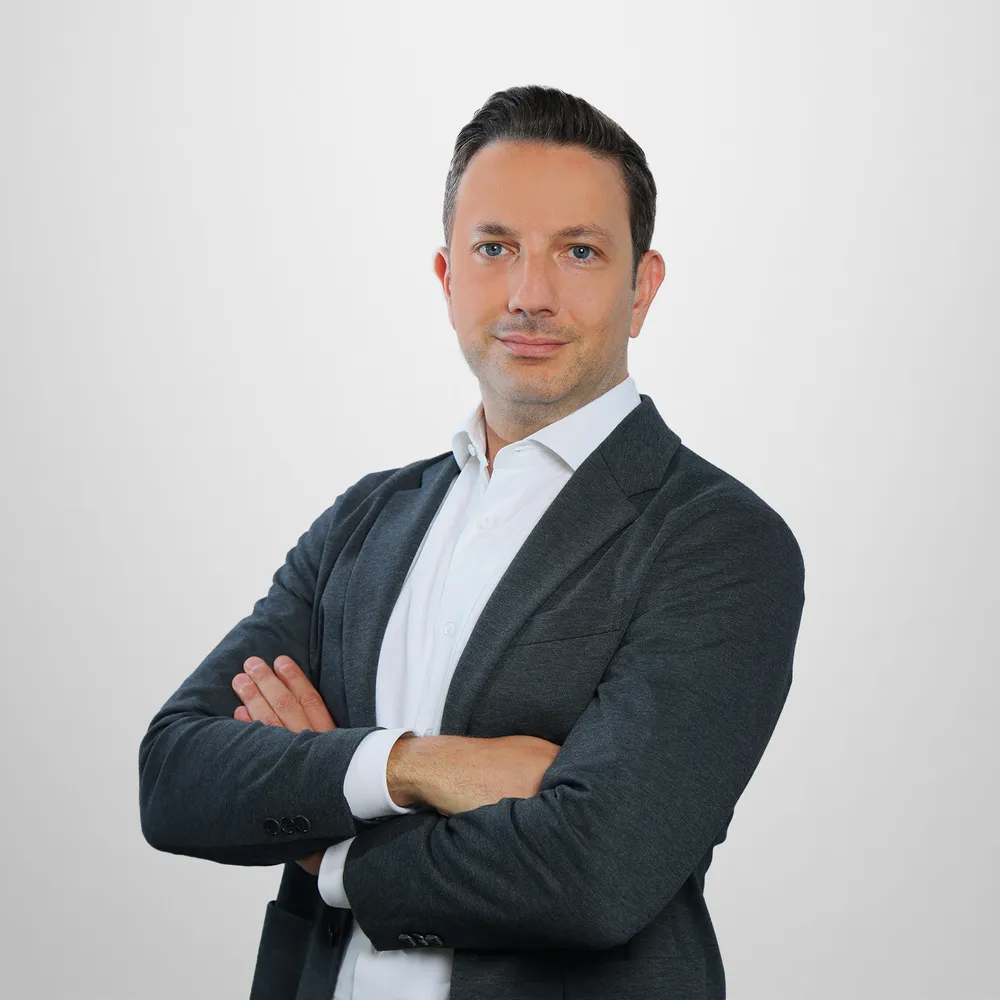
At the Global Grain Geneva 2025 conference held last week in the city of Calvin, Rabih El Chaar, founder of Smarkk, a consultancy based in Abu Dhabi specializing in agritech advisory for Gulf governments, presented a groundbreaking study. Titled Grain Supply Rewired and conducted across 26 countries, it shows a direct link between R&D investments and agricultural performance: countries that invest heavily in agricultural R&D are also the most efficient producers in the world. Agricultural technology helps counterbalance major disruption factors – droughts, trade tensions, export restrictions, rising logistics costs – that cause recurrent fluctuations in global prices and supply.
Rabih El Chaar discusses the key insights from this study and the opportunities this transformation opens for European companies, particularly Swiss ones.
Why has technology become a central issue for agricultural countries, especially in arid regions?
Droughts, geopolitical tensions, logistical disruptions… Global grain markets have never been so unpredictable and volatile. Often due to external events unrelated to actual supply or demand. One way to mitigate this volatility is to localize part of the production through technology: modernizing irrigation, optimizing inputs, genetic innovations, controlled environment agriculture… In other words, a strategic factor makes the difference: the ability of a country to integrate technology into its agriculture.
By investing in R&D, a country gradually improves the efficiency of its agricultural sector. This requires a strategic vision, but it is one of the most powerful levers to gain food sovereignty.
In your study, you present an "efficiency frontier" in agriculture. What is it?
We analyzed 26 countries by comparing their characteristics (water, land, labor, financing…) and their yields. This analysis allowed us to define an efficiency frontier. Countries on this frontier achieve the best possible yield for a given amount of inputs. What is striking is that these countries are also the ones that invest the most in agricultural R&D. Technological investment is therefore an excellent predictor of performance.
You even suggest a direct correlation between R&D investment and agricultural performance.
Yes. Our data shows a clear link: the more a country invests in R&D, the closer it tends to get to the efficiency frontier. R&D is not just a budget: it is a process. It starts with research, goes through technology maturity levels (TRLs), and leads to concrete innovations: better seeds, digital tools, genetics, automation, new cultivation techniques…
To be a high-performing agricultural producer by 2030, a country must be technologically advanced.
On average, the most successful nations invest 492 dollars in R&D per arable hectare, compared to 77 dollars for mid-ranking countries and 200 dollars for emerging countries.
The benefits are tangible: biotech technologies like CRISPR allow for a 12 to 20 % increase in yields. Digital models like “digital twins” [Note: a virtual replica of a real system – farm, greenhouse, tractor, irrigation network, etc. – that allows for simulation, prediction and optimization of its operation using data] improve yields by 5 to 15 % while reducing water consumption by 25 to 40 %. The most advanced countries save 56 % of labor and 37 % of water compared to others.
You presented a case study on Saudi Arabia: can you tell us more?
Saudi Arabia has significant potential. Our model shows that 700 million dollars invested annually in agricultural R&D could generate up to 7 billion dollars in additional production. That’s a ratio of x10, so 10 times the investment, provided that investments are made wisely, meaning concretely: adopting existing technologies for quick results ; structuring long-term R&D programs ; developing skills ; implementing appropriate public policies.
It’s not about “putting in money and waiting.” It’s a complete strategic model.
Are we already seeing results on the ground?
Yes. Saudi Arabia is very advanced in several areas. For example, in desalination, where it achieves some of the best efficiency levels in the world, in dates, of which it is one of the largest producers globally, or in olives, which were not previously cultivated but now are thanks to agronomic innovations and the diversity of its territories.
The United Arab Emirates are following a similar trajectory with a very ambitious R&D strategy.
What role can Swiss and European companies play in this movement?
It is essential to integrate foreign technologies. If Gulf countries did not import innovations, it would take them decades to catch up with global leaders. They are therefore open and even eager for Swiss, European, and international technologies.
This can be done in two ways: maturing R&D locally, by transferring part of the work to Saudi or Emirati institutions, or deploying already ready technologies, by localizing companies and supporting them on the ground.
This is also why we are developing a venture building activity: to facilitate the arrival of innovative companies in the region.
******************
Conclusions
· The agriculture of the future, especially in arid areas, will be played at the intersection of technology, R&D, and the ability of states to organize around a clear strategy.
· Gulf countries show that massive but structured investment in innovation can transform an entire sector — and open unprecedented opportunities for international agri-tech players.

Anne Barrat - 22 September 2026
Anne Barrat - 14 September 2026
Anne Barrat - 4 September 2026