Anne BarratPublished on 18 November 2026
Harvests in August in Bordeaux, virulent downy mildew in 2023 and 2024, pressure to reduce pesticides, declining consumption: the vine faces numerous challenges. Among the proposed solutions are new varieties that are resistant to diseases and better adapted to climatic conditions.
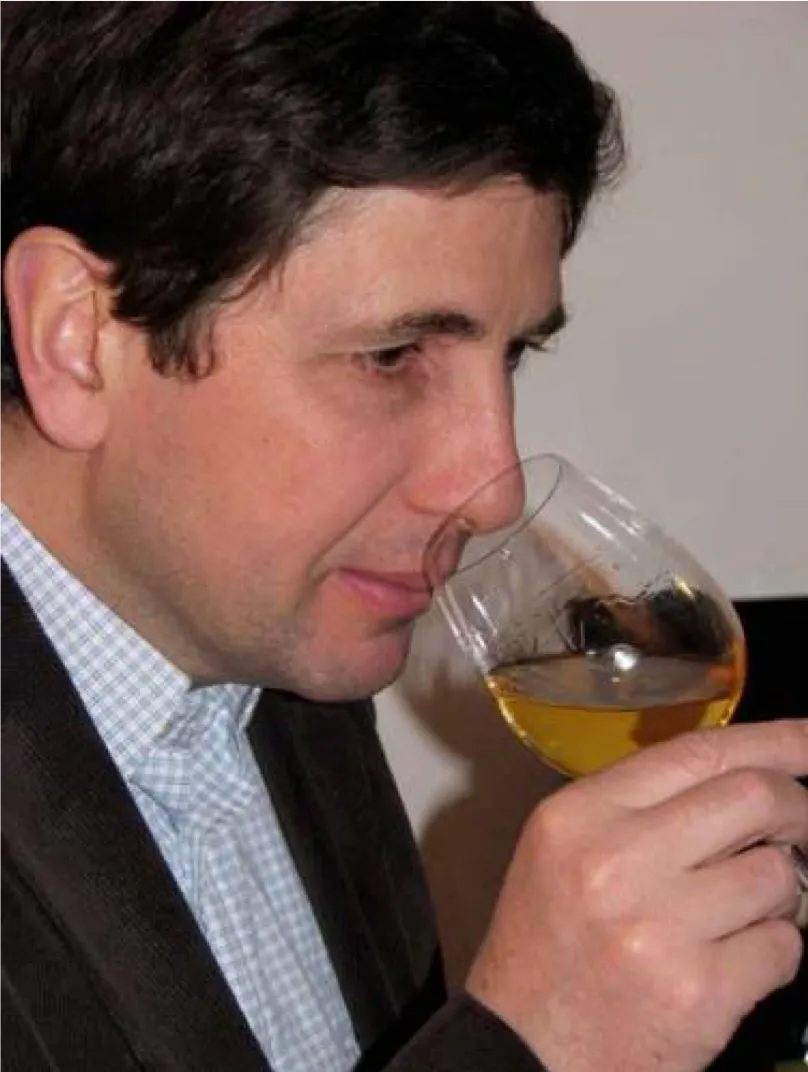
However, it is essential to distinguish between the two objectives. Against downy mildew and powdery mildew, genetics has made significant progress; in the face of warming, the equation remains more complex. Moreover, a successful variety must still win over vineyards attached to their historical grape varieties. Philippe Darriet, oenologist and director of the Institute of Vine and Wine Sciences (ISVV) in Bordeaux, sheds light on the scientific, economic, and cultural stakes of this transition.
Bloom Agritech: Some observers bet that there will be no more Merlot by 2050. Do you believe that?
Philippe Darriet: There will be less, that is true. But there will still be some, if only because replacement varieties are yet to be found, and that is not simple. Moreover, Merlot is not the only one at risk: tomorrow, with the heat, Chasselas could also ripen too early and lose its acidity. To see a grape variety cultivated for centuries disappear would be a grave loss of heritage. Fortunately, there will still be some die-hards.
What threatens these historical grape varieties?
Two things, which must be clearly distinguished. The climate, first. This year, the Bordeaux harvests began in August; forty years ago, for the same grape varieties, they never started before late August or early September. When it gets hot too early, the buds start earlier, and the vine is exposed to spring frosts, as seen in 2017, 2020, and 2021. Additionally, ripening in the middle of summer produces sweeter grapes, leading to more alcoholic wines, marked by more cooked fruit aromas and less acidity. However, wine must remain an acidic beverage, with freshness in both aroma and taste.
The diseases, next. Our grape varieties belong to the species Vitis vinifera, which is susceptible to two fungi that arrived from America in the 19th century, downy mildew and powdery mildew. Therefore, it is necessary to treat with phytosanitary products. Society rightly demands that their use be limited. Much effort has been made, and organic viticulture has developed, particularly in Gironde. However, rainy vintages, like 2023 and 2024, show how strong the pressure from diseases remains.
How can we preserve historical grape varieties like Merlot or Cabernet?
This is the strategy of the vast majority of vineyards: to keep the historical varieties to which the identity of the producers is attached and to adapt the cultivation. At ISVV, several dozen people are working on this, with the support of the first growths of Gironde as part of the Olivier de Serres chair and other national and European programs. There are many levers: the method of vine management; the rootstock, chosen to better withstand drought, as the vine is a grafted plant; shading, or even parasols, in excessively hot years; maintaining a certain yield level, as the lower it is, the sweeter the grapes. The last lever, without creating a new variety, is to select, within the same grape variety, the plants that ripen a little later. This is what is practiced in Alsace for Riesling, whose sugar richness sometimes exceeds standards.
Is the rediscovery of forgotten grape varieties another avenue?
This is another avenue: bringing back to light varieties that were neglected after phylloxera, such as Auxerrois, which is very fashionable in Alsace. In Bordeaux, the Vitadapt program has thus revived Castets, a variety very close to Merlot, selected in the 19th century. This avenue addresses climate issues but not disease.
Changing varieties means relying on genetics. Can it address both threats, diseases and climate?
Not in the same way. These are two complementary but independent fields. Resistance to downy mildew and powdery mildew relies on a few genes found in American vines. When crossed with a European vine, one of them transmits these genes to a portion of its descendants. Tolerance to heat and drought involves a whole family of genes. You cannot just push a button to make a variety late-ripening.
So selection cannot do anything against the climate?
Yes, but through a different path. Among the plants resulting from a cross, some start and ripen later than others. The breeder keeps those: a grape that ripens after the intense summer heat retains its acidity better. This is longer and less certain than transmitting a resistance gene.
Are resistant varieties really a novelty?
We need to revisit this history, as these varieties do not fall from the sky. Between 1870 and 1930, thousands of direct-producing hybrids were created by crossing American vines with each other or with European vines. Forgotten hybridizers, such as Oberlin, Seibel, or Couderc, did colossal work, in France but also in Italy or Germany. They were held in high esteem: a hybrid bears the name of Marshal Foch! As they produced without treatment, France still had 400,000 hectares of them in the 1950s.
How can we explain their abandonment after such growth?
They were accused of producing more methanol. This was false, but the argument was political. Moreover, from a taste perspective, these wines did not exactly meet consumer expectations. In Bordeaux, Pascal Ribéreau-Gayon, who led the Institute of Oenology, the ancestor of ISVV, developed a method to detect specific pigments, anthocyanins, in red wines from hybrids.
In the 1960s, lawmakers struck a significant blow: if these markers are detected, the wine cannot claim a controlled designation of origin. Hybrids were uprooted almost everywhere; about 8,000 hectares remain today. The only notable exception in appellation is Baco, created at the end of the 19th century by the teacher François Baco, which still belongs to the AOC Armagnac.
"You cannot push a button to make a variety late-ripening."
When did varietal creation resume?
At the end of the 1970s, Alain Bouquet, a researcher at INRA, revived varietal creation. He started from a very resistant American vine and practiced backcrossing. The first-generation hybrid is 50% European; recrossed, generation after generation, with different vinifera, it reaches 98 to 99% of the Vitis vinifera genome without losing its resistance genes.
But these early varieties had a major weakness: they possessed only one gene for resistance to downy mildew and one for powdery mildew. If the fungus bypasses one of these genes, the corresponding resistance falls. Cultivating a variety that has only one resistance gene is extremely dangerous, especially for a perennial plant that should not be renewed too often.
How has research overcome this fragility?
In the early 2000s, the INRAE team from Colmar partnered with two German institutes, the Julius Kühn Institute and the Staatliches Weinbauinstitut in Freiburg. Since the 1950s, the Germans had been crossing varieties carrying different genes. The ResDur program, for "durable resistance," combines these genes: two per disease for the first varieties (Artaban, Floreal, Vidoc, Voltis, which arrived in 2018), and three for ResDur 3, which the Swiss Agroscope joined in 2009. Seven varieties emerged from this by the end of 2025, after seventeen years of work.
And what about the taste qualities of the wine?
This is my specialty, and it is the real question: are these wines close to those of our historical varieties? Since the mid-2010s, France, at the initiative of INRAE and with the support of the wine inter-professions, has been re-crossing varieties carrying two resistance genes with the emblematic grape varieties of each region.
In Bordeaux, the Newvine program crossed them with Cabernet Franc, the parent of Merlot and Cabernet Sauvignon, and with Petit Verdot, which is later ripening. We obtained 169 individuals, studied for five years at ISVV, from an agronomic perspective but especially from an oenological one. A thesis I directed has just been defended. Among these resistant genotypes, some produce wines whose sensory profile is close to the typicity of Sauvignon Blanc or Cabernet.
Thus, we identify interesting genotypes, particularly among the later ripening ones: resistance to diseases and adaptation to climate can therefore converge. However, several more years of observation will be needed, particularly within the framework of the VATE system, the official evaluation prior to the registration of a variety in the catalog. Similar programs exist in Burgundy, Champagne, and the Loire Valley.
Can the new genomic techniques, which the European Union has just regulated, accelerate the movement?
The European Union considers that a variety whose number of nucleotide bases has been modified in a gene is not a genetically modified variety: this is the NGT1 category. It remains to be seen what the benefit will be for the evolution of grape varieties. For the NGT2 category, developments will come in the coming years. But for varieties intended for winemaking, the key question is first, in my opinion, societal: would consumers be willing to buy wines from such varieties?
Who finances the creation of these varieties? For wheat or corn, it is private seed companies.
For vines, the programs are supported by the state and co-financed by the wine inter-professions. In Bordeaux, the CIVB finances the Newvine program and also supports our work at ISVV.
These adaptations come at a cost. Do all winemakers have the means to keep up?
The classified growths have the means; Château Margaux can do it if it wishes. The smaller producers will have to adapt to the market. This is already visible, as is the case throughout Europe: part of the vineyard is being uprooted. Behind this, producers need to be compensated. This is what allows them to adapt and finance innovation.
Changing varieties means replanting or top-grafting, and giving up part of the harvest for a few years. Who can bear this cost? Should there be public aid, like in Switzerland, which subsidizes the planting of robust grape varieties?
This transformation can only happen with strong public support, the scientific backing of research institutes like ISVV, and in consultation with INAO, FranceAgriMer, and the wine unions.
"Varieties cultivated sometimes for seven or eight centuries cannot be replaced in a few decades."
When a new variety is ready, will the consumer follow?
This dimension must be integrated, that is certain. If tomorrow you tell a consumer that they will no longer find Cabernet Sauvignon but a variety called "Tartempion," it is not that simple. I know a winemaker in AOC Bordeaux who marketed his resistant varieties in bottles for a few years. Today, he blends them with his other wines: they did not generate enough appeal.
Could a new variety keep the name of its parent, as in Italy, where there is a "Merlot Khorus"? And would a Merlot made resistant by genome editing still be a Merlot?
This topic is being discussed at the CTPS, the national committee that brings together, under the coordination of the Ministry of Agriculture and INAO, scientists, breeders, representatives of inter-professions, and nurserymen. The designation "Merlot Khorus" has created a lot of confusion: this variety is very different from the historical Merlot, despite bearing its name. From my perspective as an oenologist, I would add that its sensory proximity to Merlot has not been evaluated rigorously enough. Hence the importance of work that fully engages oenology, like the studies we conducted in Bordeaux. As for a Merlot made resistant by genome editing, it would certainly not be called Merlot. It would be a new variety, whose sensory proximity to Merlot would need to be evaluated.
And the winemaker?
If you tell them that it's over, that they will no longer plant Merlot, will they do it spontaneously? When your family has been growing Merlot or Pinot Noir for generations and suddenly, it is no longer possible, it is brutal. There is a lot of sociology and psychology behind this. Varieties cultivated sometimes for seven or eight centuries cannot be replaced in a few decades, at least in the minds of winemakers, and probably consumers.
In Burgundy, Pinot Noir is the sole star. If another variety were to replace it, would Romanée-Conti still be Romanée-Conti?
This is a real question for Burgundians as well as for Champenois. For them, a terroir and a grape variety have been associated for centuries: in Burgundy, each "climat," meaning each delimited and named plot, is inseparable from Pinot Noir or Chardonnay. But history shows that the grape composition of a vineyard evolves. In 1960, Bordeaux was predominantly a white wine region; today, 85% of its appellation wines are red. In 1930, Malbec was much more significant there than it is today, before being supplanted by Merlot.
Varietal evolution occurs, but rarely within a lifetime: it plays out at the interface of several generations. If all the lights are green (taste, not too early maturity, good disease resistance), it will happen. But it will not be the story of a single generation.
"If tomorrow you tell a consumer that they will no longer find cabernet sauvignon but a variety 'Tartempion', it's not that simple."
In light of these upheavals, are you optimistic about the future of viticulture?
I am pragmatic. Everyone knows today that phytosanitary products create pollution found even in our children's hair. Agriculture must adopt other strategies; this is evident. And the climate is already shifting cultivation areas: vineyards are developing in England, Belgium, and sometimes in Sweden.
We are clearly at a paradigm shift. This is the subject of the international conference that ISVV is organizing at the end of November in Bordeaux, with about thirty foreign researchers: environmental stresses, resilient viticulture, new genomic techniques, consumer expectations, adaptation of oenology.

Anne Barrat - 26 October 2026
14 October 2026

Anne Barrat - 25 September 2026