Anne BarratPublished on 22 September 2026
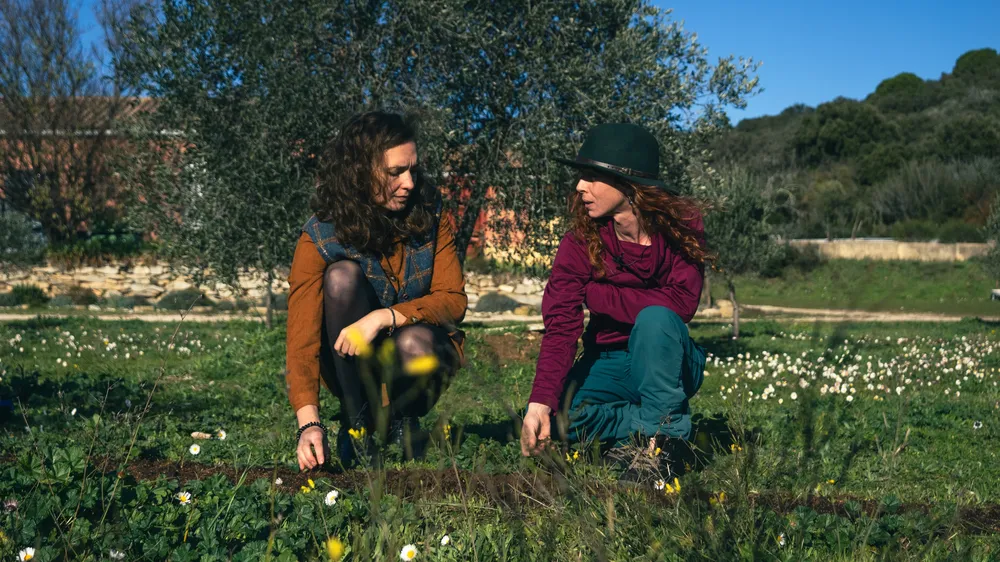
Founded in 1996, La Phocéenne de Cosmétique is celebrating its 30th anniversary this year. The French SME, led by its co-founder Éric Renard, brings together four brands: Le Petit Olivier, Lovéa, Laboratoire Vendôme, and, since January 2026, Laboratoires de Biarritz. All its products are manufactured in France, and several of its ranges are built around plant-based ingredients: olive, argan, monoi, almond, or shea.
However, manufacturing in France does not indicate where the ingredients come from. The majority of its impact is concentrated upstream: nearly 98% of its carbon footprint would fall under scope 3, its indirect emissions, with raw materials and formulation alone accounting for two-thirds of this footprint and nearly 80% of its biodiversity footprint. Supported by the Agency for the Environment and Energy Management (ADEME), it aims for a 20% reduction in its carbon footprint by 2035: better tracking of its supplies, relocating certain ingredients, and deriving more value from already available resources.
In an interview with Bloom Agritech, Sophie Dartois details the choices made by La Phocéenne to secure its plant supply chains, focusing on relocation, diversification, traceability, and valorization of co-products.
Created in 2003, Le Petit Olivier initially purchased the olive extracts used in its products. In 2010, the company took an unusual step for a cosmetics brand: it acquired a mill and a fifteen-hectare estate in Saint-Bonnet-du-Gard, not far from the Pont du Gard, with five hectares planted with 1,500 olive trees. "For the olive range and the argan range, we have really secured the supply chain, and we have committed end-to-end to the sector," emphasizes Sophie Dartois. "Buying a mill is a significant commitment for a brand like Le Petit Olivier."
The food activity of the estate is managed by a separate company: under the brand Domaine de Cante Perdrix, the mill sells its own oil and presses olives from other producers. The best olives are prioritized for them, with part of the oil then used in Le Petit Olivier's skincare products.
This control over the upstream has led to another avenue: deriving more from what the sector already produces. The extraction process indeed leaves behind co-products – the pomace, a paste of solid residues, and the olive mill wastewater – which until now have been partially spread in the orchard as fertilizer. "There was waste, the pomace. We wanted to say: let's find a better use for this waste."
Together with the company Greentech, the business has been working on this for seven years. More than 500 trials were necessary to develop, through a green chemistry process, an active ingredient for which a patent is being filed, expected to launch a range in early 2027. Hydrating, soothing, and antioxidant, it would present a skin regeneration activity quite different from that of olive oil, justifying a parallel range. "This is the first time that La Phocéenne, for its brand Le Petit Olivier, creates an active ingredient. And an active ingredient that comes from us, that truly comes from the mill of Le Petit Olivier. Moreover, an active ingredient 'with a reduced carbon impact,'" highlights Sophie Dartois, "since we are talking about waste."
2,000 kilometers from Gard, the logic is quite different. Since 2017, La Phocéenne has been supporting an argan supply chain near Essaouira, Morocco. It all started with an NGO in an isolated village of 17 families, providing water and solar electricity – hence its name, "solar village." The project has since expanded: around 300 families are involved, and a cooperative of 23 women handles the nut cracking.
Approximately 350,000 euros have been invested there over five years, co-financed with Intermarché: cracking room, school, nursery, training. About fifty jobs have been created, and the company contracts its partner to pay the women 15% more than the market price. "At its core, this is really a CSR approach: enabling the women who provide us with this oil to better live from their work."
Climate change has caught up with this commitment. After several years of drought, the purchase price of argan oil has quadrupled in seven years. It has stopped marketing pure oil, which has become incompatible with its positioning in mass distribution, in favor of a blend of argan, macadamia, and sweet almond. The rainy winter Morocco experienced this year offers hope for a respite, but the studies Sophie Dartois is following indicate a significantly reduced area for the argan tree by 2050. "This is a sector very vulnerable to climate change," she points out. "We know it will become increasingly complicated."
Securing a supply chain does not protect against price surges; it allows for understanding the causes and acting on the vulnerability of producers. Two cooperatives, one agricultural and one ecotourism, now complement the argan cooperative, and the permaculture garden provides plants transformed into hydrolats, sold under the women's brand, Village Solaire. "When I talk about securing," details Sophie Dartois, "it is securing for us, but also empowering for the women. Our goal is for them to be able to manage without us, to be completely autonomous."
The olive and argan illustrate two opposing models: here the company owns part of the production; there, it refuses to be the sole outlet for a supply chain.
Relocating is something La Phocéenne knows how to do: Laboratoire Vendôme, acquired in 2023 from an Italian group, has seen its production moved back from Italy and Poland to France. Relocating a plant ingredient is much more delicate. Studies are underway to explore the cultivation of the argan tree in Spain or southern France; a few trees have even been planted in Gard as an experiment. However, the tree is endemic to Morocco, its oil protected by a geographical indication; moving the supply chain would mean taking it away from those who depend on it for their livelihood. "If tomorrow we could produce argan in France, why not, that could secure us. But now, we are working with women who live and depend on this profession, and all economic development depends on this heritage."
Shea, almond, or monoi will not experience the same degree of integration: the company is preparing a responsible purchasing charter and auditing its supplies. Lovéa's monoi reminds us that proximity is not limited to nationality: "it is France, of course, but it is French Polynesia, with distant challenges". And Sophie Dartois continues: "Decarbonizing our formulas, finding alternatives from more traceable supply chains, certifications, and the relocalization of assets is a challenge for 2035: to depend less on ingredients from the ends of the earth, on ingredients that are less easily traceable, on which we have less control."
The active derived from olive by-products offers the most advanced expression: a local resource already available, a waste rather than an additional crop. But Sophie Dartois warns against a purely industrial reading, as "securing raw materials may involve less about bringing everything closer together than about choosing, supply chain by supply chain, what needs to be relocalized, diversified, transformed, or preserved where it grows."
Anne Barrat - 1 June 2026
Source: Agropages - 23 September 2026
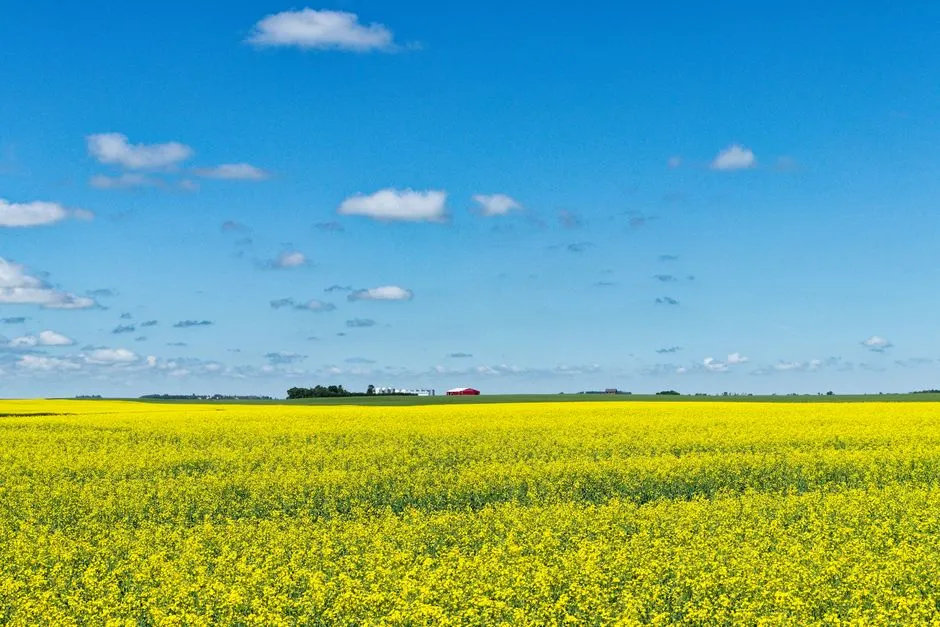
Original title: "BASF’s InVigor Gold canola seed to be processed by Bunge, su..."
Source: Agropages - 16 September 2026
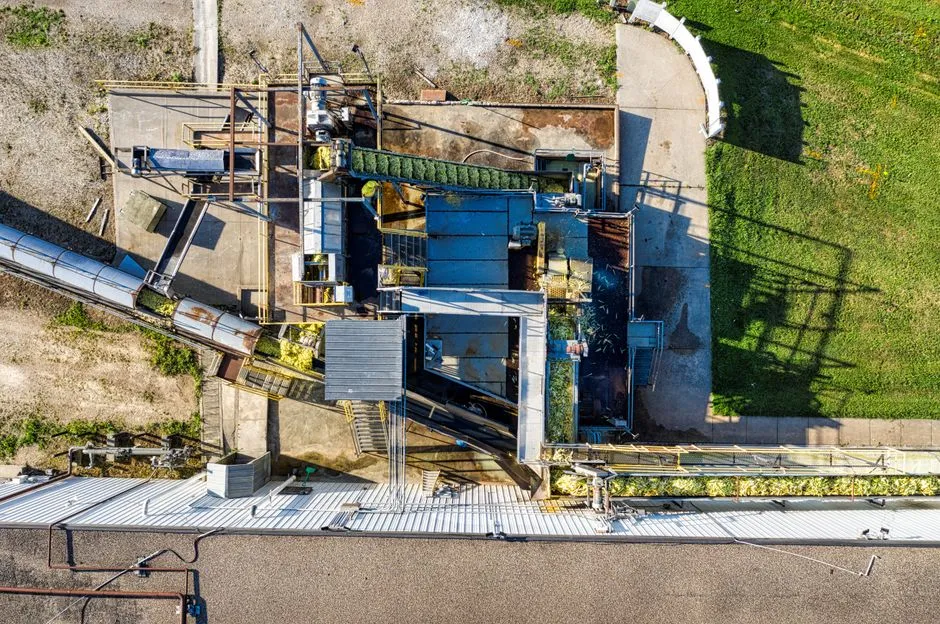
Original title: "CHS to build soybean processing facility in Wisconsin"