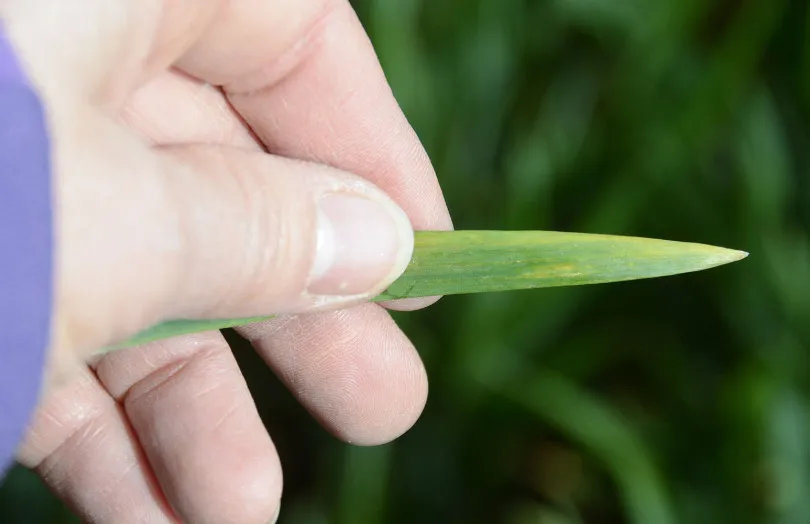
The CRUSTY model from ARVALIS warns of an increased risk of yellow and brown rust in wheat crops, highlighting the importance of monitoring sensitive varieties. Emerging pathotypes could undermine the resistance of wheat, making rigorous observation and appropriate interventions essential upon disease detection.
Source: Arvalis, published under the title "Rouilles des blés : observer pour ne pas être surpris !" - 29 March 2026
Read more
The global organic market is entering a phase of expansion: already exceeding $15 billion, it could reach $25 billion by 2030, with an annual growth rate of nearly 10%. Latin America is the main growth driver, despite persistent structural challenges related to adoption and market fragmentation. During a workshop on organic inputs, Ignacio Moyano from DunhamTrimmer emphasized that Brazil, representing 7% of the global market, plays a central role due to its large-scale agriculture and favorable regulatory framework. However, the lack of technical training among farmers remains a major barrier to the adoption of these innovative solutions.
Source: Agropages, published under the title "LATAM drives global biologicals growth amid structural bottl..." - 27 March 2026
Read more
BASF announces a price increase of its amine portfolio in Europe, reaching up to 30%, in response to rising raw material and energy costs. This decision could have significant repercussions on the agrochemical sector, particularly on the production costs of herbicides, thereby affecting farmers and the accessibility of agricultural inputs in an already strained context due to supply chain dynamics.
Source: Agropages, published under the title "BASF Intermediates increases prices for its Standard Amines ..." - 27 March 2026
Read more
At the Chinese International Agrochemical and Crop Protection Products Exhibition held last week in Shanghai, the agrochemical sector displayed signs of tension, with larger companies attracting more visitors than niche ones. The rise in raw material prices, driven by disruptions in the energy supply chain, complicates the situation. Indian producers face increased cost pressures, while farmers struggle to keep up with rising prices, which could impact future demand for agrochemical products.
Source: Agropages, published under the title "Visita ao CAC Xangai: custos em alta, mas o repasse nos preç..." - 27 March 2026
Read more
The Animal and Plant Health Inspection Service (APHIS) of the U.S. Department of Agriculture (USDA) has announced the deregulation of Bayer's MON 95275 corn, genetically engineered to resist pests. After a thorough assessment, APHIS determined that this corn does not pose an increased phytosanitary risk compared to its non-modified counterpart. This decision could transform pest management in corn crops and influence agricultural practices in the United States.
Source: Agropages, published under the title "USDA deregulates Bayer’s corn engineered for insect resistan..." - 27 March 2026
Read more
As the fertilizer market faces increasing pressures, Pivot Bio is ramping up production and lowering prices to ensure American farmers have a reliable nitrogen supply. With disruptions expected until 2027, the company highlights its innovative products that can replace synthetic fertilizers while enhancing yields. Farmers are expressing a growing need for domestic and predictable solutions, thereby reinforcing Pivot Bio's role in agricultural resilience.
Source: Agropages, published under the title "Pivot Bio continues its rapid response to global fertilizer ..." - 27 March 2026
Read more
The use of growth regulators for wheat and barley crops requires a careful assessment of growing conditions and varieties. Decision grids help analyze the risk of lodging, while precise recommendations on application conditions aim to minimize phytotoxicity risks. Farmers should prioritize tolerant varieties and adjust their interventions based on weather forecasts to ensure optimal yields.
Source: Arvalis, published under the title "Régulation des céréales : une décision à ajuster, pas à auto..." - 26 March 2026
Read more
The Brazilian Ministry of Agriculture has approved the use of pesticides for carinata, a promising crop for sustainable biofuel production. These approvals, which include an insecticide and a herbicide, are crucial for transitioning to commercial production of this plant, which fits into soybean cropping systems. Nufarm, a leader in hybrid carinata seed marketing, anticipates rapid expansion of this crop in Latin America, supported by long-term agreements with biofuel market players.
Source: Agropages, published under the title "Brazil approves first crop protection products for carinata" - 26 March 2026
Read more
The current crisis in the Middle East highlights the urgent need to decentralize fertilizer production to shield farmers from oil market fluctuations. With technological innovations, it is now possible to produce fertilizers from renewable energy and local raw materials, which could transform the global food supply chain and improve food security, especially for farmers in developing regions.
Amit Roy, PhD and Nicolas Pinkowski, PhD, Source: Agfundernews, published under the title "Guest article: Technology now exists to decouple fertilizer ..." - 26 March 2026
Read more
France has suspended the import of food products containing residues of certain pesticides, even below the maximum allowable limits. The substances involved—such as glufosinate and mancozeb—affect a wide range of products. The alert from APEDA, the Indian agency responsible for agricultural export development, urges exporters to strengthen their practices and risk management, highlighting the tightening of European requirements on agrochemical residues.
Source: Agropages, published under the title "France tightens agrochemical rules: India's APEDA warns expo..." - 26 March 2026
Read more