

AI-assisted international press reviewPress review

Agricultural Exports: Alert in India After Stricter Pesticide Residue Rules in France
France has suspended the import of food products containing residues of certain pesticides, even below the maximum allowable limits. The substances involved—such as glufosinate and mancozeb—affect a wide range of products. The alert from APEDA, the Indian agency responsible for agricultural export development, urges exporters to strengthen their practices and risk management, highlighting the tightening of European requirements on agrochemical residues.
Source: Agropages, published under the title "France tightens agrochemical rules: India's APEDA warns expo..." - 26 March 2026
Read more
GMOs/NTGs Regulation: Europe Strengthens Its Framework Since 2018
Since the CJEU ruling in 2018, the European Union has clarified the regulation of GMOs derived from new techniques (NTGs), compelling member states to reassess their previous positions. A 2021 report highlighted cases of GMOs initially exempted that had to be integrated into the regulatory framework. In 2025, a Dutch report raises questions about the uniform interpretation of Directive 2001/18, revealing disparities in GMO management within the EU.
Source: Info Ogm, published under the title "Depuis 2018, l’UE a su réglementer des OGM/NTG" - 24 March 2026
Read more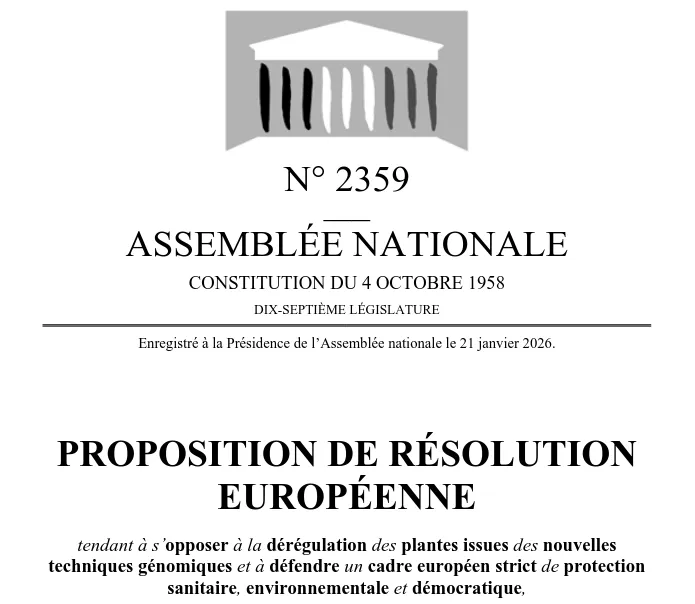
Deregulation of GMOs/NGTs: 71 French MPs Oppose the Government
Following a shift in the French government's stance towards the deregulation of GMOs derived from new genomic techniques, 71 MPs from La France insoumise have submitted a resolution proposal. They urge the government to oppose this European text, advocating for a strict framework of health and environmental protection in response to non-binding commitments from the European Commission.
Source: Info Ogm, published under the title "71 députés enjoignent le gouvernement français à rejeter la ..." - 16 March 2026
Read more
European Commission Approves GM Soybean DBN9004 from Dabeinong
On March 10, 2026, the European Commission approved the import and processing of genetically modified soybean DBN9004, developed by Beijing Dabeinong Biotechnology Co., Ltd. This authorization, based on a positive assessment from EFSA, allows its use in the food and animal feed chain in Europe, while imposing strict traceability rules. DBN9004, which offers dual herbicide tolerance, has also received approvals in other major soybean importing regions.
Source: Agropages, published under the title "European Commission Authorizes Import and Processing of Dabe..." - 13 March 2026
Read more
Brazil Strengthens Fertilizer Regulation
Brazil has adopted Decree 12.858/2026 to more strictly regulate the production and marketing of fertilizers. The legislation increases penalties for violations related to agricultural inputs and imposes self-monitoring programs on industry players, allowing a two-year period for compliance. The goal is to establish a more proactive management of quality and traceability in the input supply chain.
Source: Agropages, published under the title "New Brazilian decree regulates inspection, production and sa..." - 9 March 2026
Read more
Swiss Parliament Accelerates Pesticide Approval Process
The Swiss Senate has voted in favor of a simplified authorization procedure for pesticides already approved in Europe, emphasizing the urgency for rapid approval. This initiative, backed by the Centre party, aims to facilitate access to new products while maintaining controls in sensitive areas. Left-wing parties criticize this move, arguing that an adequate procedure has been in place since 2025, raising concerns about public health and nature conservation.
Source: Agropages, published under the title "Swiss parliament backs faster approval of pesticides" - 6 March 2026
Read more
EU Political Agreement on New Genomic Techniques in Agriculture
The European Commission has announced an agreement on a regulatory framework for plants developed using new genomic techniques, aimed at promoting innovation while adhering to safety standards. This framework introduces two categories of NGT plants, facilitating access to more resilient and sustainable varieties for farmers, while reducing administrative burdens. The implementation of these rules is scheduled for 2028, accompanied by a program to monitor economic and environmental impacts.
SEPEHR ACHARD, Source: Igronews, published under the title "EU Commission Welcomes Political Agreement on New Genomic Te..." - 23 February 2026
Read more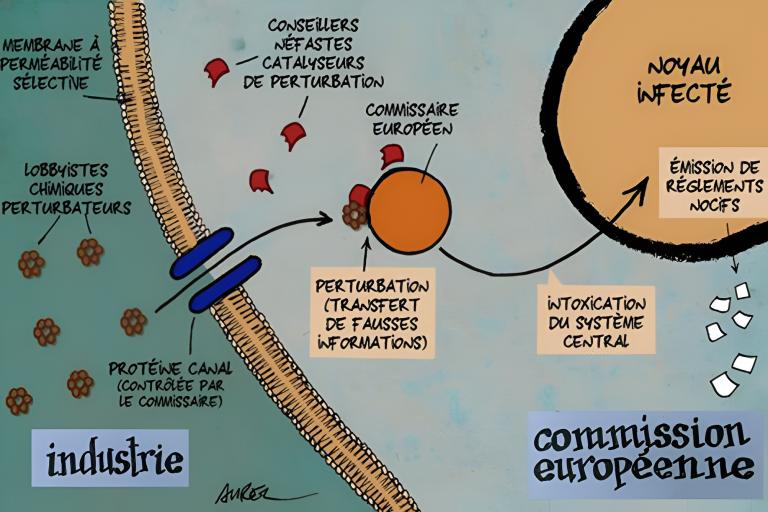
Biotech Regulation: Innovation at the Expense of Precaution?
The European Commission recently presented a proposal for a regulation aimed at strengthening the biotechnology and bioproduction sectors. This text, part of a series of legislative initiatives, seeks to simplify authorization procedures and reduce regulatory constraints. However, this approach raises concerns about public health and environmental protection by redefining priorities in favor of industrial interests and startups.
Source: Info Ogm, published under the title "Règlement biotech : la précaution sacrifiée au nom de l’inno..." - 17 February 2026
Read more
Australia Approves Cultivation of Genetically Modified Purple Tomato
The Australian Office of Gene Technology Regulator has issued a license for the genetically modified tomato that produces natural purple pigments. This tomato, which can be grown across Australia, has been deemed safe for health and the environment. However, its commercialization as food requires additional approval, and it will be subject to mandatory labeling as a GM product.
Source: Agropages, published under the title "Australia approves commercial release of GM purple tomato" - 12 February 2026
Read more
New EU Organic Regulation Guidelines for Non-EU Operators
A new guide on the production, preparation, and export of organic plant products to the European Union provides a comprehensive and simplified summary of the legal requirements for operators and groups of operators in non-EU countries. This document, developed in collaboration with the Research Institute of Organic Agriculture (FIBL), aims to facilitate understanding of the new rules and certification requirements, focusing on organic products to reduce complexity.
Source: Agropages, published under the title "New guidance on EU Organic Regulation for non-EU operators a..." - 9 February 2026
Read more
Global Acceptance of Crops from Genome Editing (GE) Advances
The growing acceptance of crops from genome editing (GE) reflects a shift in perceptions among regulators and the public. While countries like Canada and the United States adopt more flexible regulatory frameworks for these new techniques, the European Union has also revised its stance, paving the way for a more favorable classification of plants obtained through genome editing. However, uncertainties remain regarding their acceptance in certain export markets, particularly in Asia.
Source: Agropages, published under the title "Global acceptance grows for gene edited crops" - 6 February 2026
Read more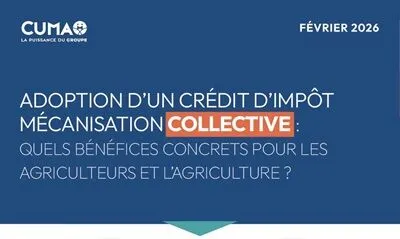
Tax Revolution for Agriculture: Equipment Sharing Finally Recognized by the State
FRANCE. On February 2, 2026, the collective mechanization tax credit will come into effect, an unprecedented fiscal measure that supports the pooling of agricultural equipment among farmers through Cuma. This initiative, praised by the Cuma Network and parliamentarians, aims to enhance the competitiveness of farms in the face of rising mechanization costs. With a rate of 7.5% and eligibility caps, this measure could transform agricultural practices in France, promoting a more responsible and cooperative approach.
Publié par CUMA FRANCE, Source: Pleinchamp, published under the title "Révolution fiscale pour l'agriculture : le partage de matéri..." - 6 February 2026
Read more
Aviation Biofuels: An Opportunity for Cover Crops
European regulations mandating the use of 2% biofuels for aircraft at major airports starting in 2025 "open a huge market" for cover crops like camelina, sunflower, safflower, and Abyssinian mustard, says Louis-Marie Allard, an engineer at Terres Inovia. This could transform agricultural practices and promote the growth of cover crops in the agricultural sector.
Source: La France Agricole, published under the title "Les carburants d’avion durables sont une opportunité pour le..." - 5 February 2026
Read more
Green Nanopesticides: Potential Hindered by Lack of Clear Definition and Consensus on Composition
The rise of nanopesticides made from natural ingredients raises crucial questions about their definition and regulation. While research progresses towards more sustainable formulations, the registration process in Brazil remains complex and lengthy, hindering market access for these promising solutions. However, producers are showing increasing interest in more effective and less harmful products, which could transform the agricultural landscape.
Source: Agropages, published under the title "Lack of information hinders regulation of ‘green’ nanopestic..." - 5 February 2026
Read more
Mexico and Brazil: Agrochemical Regulatory Outlook for 2026
Regulatory reforms in Mexico and Brazil are transforming pesticide and fertilizer management, with strategic implications for businesses. Mexico has implemented regulations aimed at streamlining approval processes, while Brazil is considering major changes that could redefine registration and risk substance management requirements. Companies must prepare for these changes to ensure compliance and optimize market access.
Source: Agropages, published under the title "2026 LATAM agrochemical regulatory outlook: Mexico and Brazi..." - 2 February 2026
Read more
The DBV and NTGs: A Unique Stance on Agricultural Patents in Europe
The Deutscher Bauernverband (DBV), Germany's leading agricultural union, advocates for new genetic modification techniques (NTGs) while condemning plant patents, which it views as detrimental to innovation and farmer autonomy. This original stance contrasts with that of other European agricultural organizations, often more supportive of patent protection, raising crucial questions about the future of agriculture and varietal research in Europe.
Source: Info Ogm, published under the title "Brevets et NTG : le positionnement singulier du principal sy..." - 30 January 2026
Read more
Deregulation of GMOs: The European Commission Strengthens Its Power
The European Commission is moving towards deregulating GMOs by removing the framework for plants derived from new genetic modification techniques. This initiative, approved by the Council of the European Union, includes controversial measures such as unlimited pesticide authorization and an enhancement of the Commission's powers over future legislation. These changes aim to boost the biotechnology sector in Europe but raise concerns about the safety and regulation of GMO products.
Source: Info Ogm, published under the title "La Commission européenne en maître absolu sur les législatio..." - 21 January 2026
Read more
Deregulation of GM Microorganisms: A New Step in Europe
On December 16, 2025, the European Commission proposed amending Directive 2001/18 to facilitate the marketing of genetically modified microorganisms. This initiative aims to reduce regulatory requirements, particularly regarding traceability and environmental monitoring, and is part of a broader context of deregulation of GMOs, following plants and in anticipation of potential deregulation of animals in 2026. Inf’OGM is preparing to analyze the implications of this controversial proposal.
Source: Info Ogm, published under the title "La déréglementation des micro-organismes OGM est en cours" - 20 January 2026
Read more
Australia: Consultation on Amendments to Genetic Technology Regulations
In September 2024, amendments to the Gene Technology Act 2000 were proposed to enhance the responsiveness of the National Gene Technology Scheme. These changes require amendments to the Gene Technology Regulations 2001, and a consultation document has been made available to gather stakeholder feedback. Submissions are open until March 1, 2026.
Source: Agropages, published under the title "Australia - Consultation on the proposed amendments to the G..." - 19 January 2026
Read more
The EU Pesticide Controversy: Global Stakes and Impacts
The growing discussion around banned pesticides in the EU highlights regulatory inconsistencies that affect not only European farmers but also Chinese agrochemical companies. As residue standards become trade barriers, businesses must adapt to a landscape where risk is increasingly tied to political and ethical controversies, thus redefining competition in the global market.
Source: Agropages, published under the title "The EU Pesticide ″Double Standard″ Debate Escalates" - 19 January 2026
Read more