

AI-assisted international press reviewPress review

Europe Grants First Emergency Approval for RNA Insecticide Against Potato Beetle in Belgium
This marks a first in Europe. Belgian authorities have granted an emergency use authorization for Calantha®, an innovative RNA-based insecticide aimed at combating the potato beetle during the 2026 growing season. Calantha® has been developed to meet environmental standards, with no detectable residues on crops. It is designed to be safe for bees and other non-target organisms, addressing growing environmental expectations.
Source: Agropages, published under the title "GreenLight Biosciences secures Belgian emergency use authori..." - 7 May 2026
Read more
Fungicides in Orchards: Summit Agro Expands Prolivo Use Against Powdery Mildew on Apple and Cherry
Summit Agro USA has announced the expansion of the Prolivo 300SC fungicide label to include control of powdery mildew on apples and cherries (except in California and New York), enhancing its use in high-value specialty crops. Prolivo is notable for its ability to inhibit lesion formation and sporulation, while providing extended protection through its redistribution and vapor activity, thus safeguarding a larger portion of foliage and fruit during critical disease management periods.
Source: Agropages, published under the title "Summit Agro USA expands PROLIVO® 300SC Fungicide label to ap..." - 6 May 2026
Read more
Brussels Revises Pesticide Residue Thresholds: Trade, Competitiveness, and Agricultural Innovation Challenges
Ongoing discussions in Brussels regarding maximum residue levels (MRLs), market access standards ensuring consumer exposure to pesticide residues remains within safe limits, could have significant implications for food safety, supply chains, and innovation. CropLife Europe calls for a rigorous impact assessment to ensure any legislative changes are evidence-based and consider overall economic and trade effects.
Source: Agropages, published under the title "CropLife Europe - What a full Impact Assessment on EU MRL po..." - 6 May 2026
Read more
Blight-resistant potatoes: Switzerland tests new selection techniques without foreign DNA
Agroscope (Swiss competence center in agronomic and agri-food research) is conducting a trial on cisgenic blight-resistant potatoes, authorized by the Federal Office for the Environment. This project aims to develop varieties without foreign DNA, thereby reducing the need for plant protection products and improving resistance to extreme climatic conditions.
Source: Agropages, published under the title "Field trial with cisgenic potatoes: Sustainable disease resi..." - 6 May 2026
Read more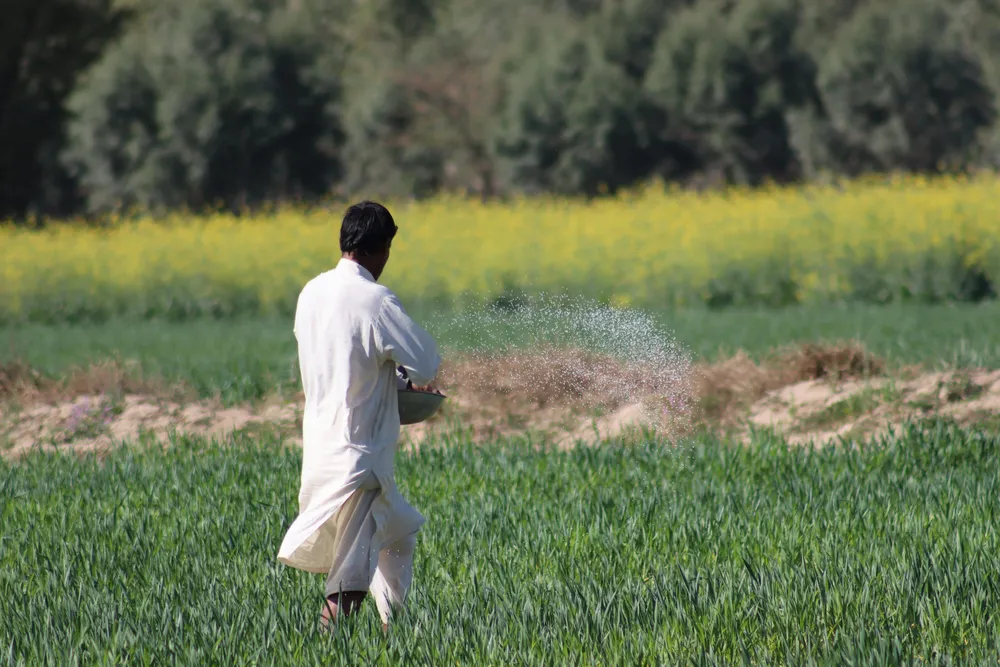
Nano-Fertilizers: Meghmani Crop Nutrition Secures Approval for Nano DAP, Nano NPK, and Nano Zinc in India
Meghmani Organics Limited announced that its subsidiary Meghmani Crop Nutrition Ltd has received approval from the Indian Ministry of Agriculture to produce nano fertilizers, including Nano DAP, Nano NPK, and Nano Zinc. This initiative aims to meet the growing needs of Indian farmers for crop nutrition. Nano fertilizers are designed to enhance nutrient absorption and reduce waste. Production will commence at the Sanand plant in Gujarat.
Source: Agropages, published under the title "Meghmani Organics to manufacture Nano DAP, Nano NPK and Nano..." - 5 May 2026
Read more
New Genomic Techniques: European Agri-Food Industry Calls for Regulatory Framework Validation
As the plenary vote approaches, a broad coalition of stakeholders in the European agri-food value chain urges Members of the European Parliament to support the adoption of regulations on plants derived from new genomic techniques (NGT). They emphasize the need for a clear legal framework to enhance the sector's competitiveness and sustainability, while highlighting the importance of distinguishing between conventional-type NGT plants and those subject to GMO legislation.
Source: Agropages, published under the title "EU - 31 agri-food value chain representatives call for swift..." - 5 May 2026
Read more
Biotalys Secures EPA Approval for EVOCA, Refocusing on Biofungicides
Biotalys reaches a key milestone with the EPA's approval of its biofungicide EVOCA, validating its AGROBODY™ technology platform. Concurrently, the Belgian company forms a strategic partnership with AgroFresh to strengthen its post-harvest positions and refocuses its efforts on advanced biofungicide programs. Despite losses in 2025, the company aims for an EVOCA NG launch in the U.S. by 2029, in a market estimated at over one billion dollars.
Source: Agropages, published under the title "Biotalys reports full-year 2025 financial results and busine..." - 1 May 2026
Read more
India: Agrochemical Industry Warns of Data Protection Risks
The Indian Crop Protection Federation (CCFI) warns of the consequences of introducing data protection in the Indian agrochemical sector. CCFI President Deepak Shah emphasizes that data exclusivity could create monopolies, delay the arrival of generic products, and increase costs for farmers, while undermining India's competitiveness in the global market.
Source: Agropages, published under the title "Data exclusivity in agrochemicals could undermine ‘Make in I..." - 1 May 2026
Read more
Kenya Accelerates Biopesticide Development with Dedicated Regulatory Reform
Kenya's agricultural sector is transforming with the emergence of biopesticides, addressing sustainability challenges and compliance with international standards. The revision of registration requirements and the establishment of a specialized division within the PCPB (Pesticide Control Products Board) aim to facilitate the adoption of these alternatives.
Source: Agropages, published under the title "Shaping Kenya’s biopesticide: Industry consultation on regis..." - 30 April 2026
Read more
Biostimulants: Seipasa's Kynetic4® Approved by European Regulations
Seipasa, a Spanish company specializing in biotechnological solutions for agriculture, has recently obtained European certification for its biostimulant Kynetic4®. Classified as a non-microbial biostimulant under regulation (EU) 2019/1009, Kynetic4® is designed to optimize plant flowering and enhance their metabolism, while increasing their resistance to adverse environmental conditions.
Source: Agropages, published under the title "Seipasa secures new European biostimulant registration for K..." - 30 April 2026
Read more
EPA Approves CarriCea T1, an Innovative Rootstock to Combat Citrus Greening in Florida
The EPA's approval of CarriCea T1, a modified citrus rootstock, marks a significant advancement in the fight against greening disease, which has devastated over 90% of citrus production in Florida over the past 20 years. By enabling trees to bolster their natural defenses, this innovation reduces reliance on chemical pesticides while supporting the sustainability of American agriculture.
Source: Agropages, published under the title "New citrus tool to help prevent widespread loss of citrus cr..." - 29 April 2026
Read more
European Regulation and AI: Can EU Regulation Become an Innovation Lever for Agritech?
Michael Dean, Source: Agfundernews, published under the title "A Brussels moat: Can European regulation work for founders?" - 29 April 2026
Read more
United States: Biotalys Secures First Approval for Protein Biofungicide in Florida, Key Step for AGROBODY™ Biocontrols
Biotalys, an AgTech company, announced that its biofungicide EVOCA™ has received state registration in Florida, marking a breakthrough for protein-based biocontrols. This approval, the first for an AGROBODY™ in the United States, highlights EVOCA's potential in combating major fungal diseases in fruit and vegetable crops. Similar regulatory developments are underway in California and Europe, with commercial launches expected in the coming years.
Source: Agropages, published under the title "Biotalys achieves first U.S. state registration for EVOCA in..." - 28 April 2026
Read more
European Regulation of Plant Protection Products at the Heart of 2026 Brussels Conference
The second edition of the conference on crop protection regulation, organized by the ECCA (European Crop Protection Association), will take place in Brussels in September 2026. This crucial event for the post-patent crop protection sector will address regulatory developments related to the EU's food safety simplification package. Discussions will focus on active substance assessments and the sector's role in agricultural competitiveness, bringing together decision-makers and key stakeholders to exchange on upcoming challenges and opportunities.
Source: Agropages, published under the title "Europe’s post-patent plant protection sector to assess EU re..." - 27 April 2026
Read more
Euroseeds Welcomes the Adoption of the Text on New Genomic Techniques by the EU Council
Euroseeds expressed its satisfaction following the adoption by the Council of the European Union of the compromise text on New Genomic Techniques (NGTs). This decision marks a significant advancement in the legislative process, paving the way for greater innovation in plant breeding. Euroseeds looks forward to the final votes from the European Parliament, which are expected to conclude this crucial legislative procedure for competitiveness and food security in Europe.
Source: Agropages, published under the title "Euroseeds welcomes Council adoption of NGT trilogue agreemen..." - 22 April 2026
Read more
China Set to Approve Laminarin as a Biopesticide
Laminarin, a polysaccharide derived from Laminaria japonica, is on the verge of being approved by the Institute for the Control of Agrochemical Products of the Ministry of Agriculture of China (ICAMA), marking a significant advancement in the use of biopesticides. This innovative product, submitted by Laboratoires Goëmar, activates the natural defense of plants against diseases such as Botrytis cinerea and Podosphaera xanthii, providing an ecological alternative to traditional fungicides.
Source: Agropages, published under the title "Breakthrough in biopesticides: Laminaria japonica Polysaccha..." - 22 April 2026
Read more
In the Netherlands, 46 PFAS Pesticides Could Be Banned Due to Drinking Water Risks
The Dutch regulator Ctgb is considering banning 46 PFAS-containing pesticides following research indicating their impact on groundwater. Potato producers, reliant on these products to combat blight, may face significant losses. The search for alternatives proves complex, as the final decision is expected by April 2028.
Source: Agropages, published under the title "Dutch regulator weighs ban on 46 PFAS pesticides over drinki..." - 22 April 2026
Read more
The Council of the European Union Supports Deregulation of GMOs/NGTs
On April 21, 2026, the Council of the European Union adopted a favorable position on the deregulation of GMOs and NGTs, ending months of debate. This text, which still needs to pass through the European Parliament, could transform the landscape of agriculture and biotechnology in Europe by facilitating the use of new genetic modification techniques.
Source: Info Ogm, published under the title "Le Conseil de l’UE favorable à la déréglementation des OGM/N..." - 21 April 2026
Read more
To Accelerate Agricultural Projects, Emmanuel Macron Advocates the 'Notre-Dame Method'
During a meeting with mayors, Emmanuel Macron announced his intention to implement the "Notre-Dame method" to reduce administrative delays related to agricultural projects. This approach aims to simplify procedures and encourage the development of projects, whether large or small, in order to restore hope to farmers facing international competition. On April 22, a decentralized council of ministers in Allier will mark the launch of this initiative.
Publié par Pleinchamp, Source: Pleinchamp, published under the title "Pour accélérer les projets agricoles, Emmanuel Macron prône ..." - 17 April 2026
Read more
MACF: Significant Cost Increases for Grain Farmers by 2034
The Carbon Border Adjustment Mechanism (CBAM) imposes a tax on nitrogen fertilizers, leading to significant cost increases for grain farms. By 2034, fertilization expenses could rise by 25 to 40%, threatening farmers' competitiveness amid already high production costs. Farmers face a dilemma, having to choose between reducing their fertilization or suffering yield and quality losses.
Publié par Perspectives Agricoles, Source: Pleinchamp, published under the title "Charges opérationnelles : MACF, des surcoûts « conséquents »" - 30 March 2026
Read more