Loading Bloom Agritech...

Subscribe to the newsletter
© 2026 Bloom Agritech. All rights reserved.
Loading Bloom Agritech...
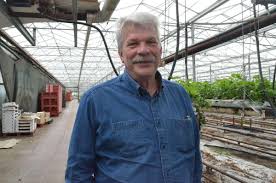
Former strawberry and plant producer based in Lot-et-Garonne, Yves Bertrand was one of the pioneers of greenhouse cultivation development in his region. Born in Saint-Étienne to teacher parents – "I wanted to be a farmer," he confides – he trained in market gardening in Sainte-Livrade before joining the Chamber of Agriculture of Marmande as a specialized technician in tomatoes and strawberries. By the end of the 1970s, he was at the forefront of a major shift: the transition from open field to greenhouse production, imposed by the evolution of large distribution, markets, and economic constraints. He reflects on this transformation, its effects on yields, taste, water usage, and treatments, but also on France's technological dependence on the Netherlands and the environmental challenges that are reshaping the model today.
When you started working in Marmande, when did you realize that open field was reaching its limits?
By the late 70s, it became clear that our open field system no longer matched the distribution system. Large distribution demanded regular quantities, homogeneous products, consistent supply, and, if possible, a presence 12 months a year.
We, in open field, started around June 15 and finished at the end of October. When it was very hot, we threw away tomatoes; when it was cold, we couldn't serve. We were on a declining economic model.
Meanwhile, the Dutch were producing under glass and selling tomatoes in Marseille in August. That annoyed me. I realized that our production tool was no longer suitable. We conducted many trials in open field, particularly with INRAe – the Ferline was a success – but the results did not sustainably meet market expectations. So, we ventured into greenhouses, simply to remain tomato producers.
The development of greenhouses was accompanied by a standardization of varieties. Did this come at the expense of taste?
At the time, yes. Dutch tomatoes were an example: they were very standardized but lacked flavor. And we, at the beginning, under glass, cultivated the same varieties, with the same taste limitations. Because what large distribution wanted, and still wants, was primarily homogeneity: a standard product that can be placed everywhere, in purchasing centers and stores, without complaint, without differences from one store to another. And from that perspective, it was a success.
Regarding taste, today we have greatly improved through genetics. Taste is a genetic characteristic. And there is a second aspect: the time of production. With equal genetics, a production from January is less good than a production from May in terms of sugar and acidity.
" What large distribution wants is primarily homogeneity: a standard product that can be placed everywhere,
in purchasing centers and stores, without complaint, without differences from one store to another."
Does greenhouse cultivation really mitigate the effects of the seasons?
It mitigates them, of course, but it does not eliminate them. Even under glass, there are variations depending on the varieties and production periods. Generally speaking, a very early fruit, whether it is an apricot, a peach, or a tomato, is often less balanced than a fruit harvested in full season. This phenomenon also exists under glass, even if it is less pronounced.
And then, taste remains partly cultural: the tomato you appreciate does not necessarily correspond to what a consumer from the South or West expects. Today, taste is also largely influenced by the market. So, it must be put into perspective.
Does cultivating under glass render the idea of eating seasonal vegetables obsolete?
Not at all, the season remains important. Even if the greenhouse allows for a controlled climate, it does not fully compensate for the light deficit in January compared to April.
It is also important to consider consumption patterns. The tomato has become a mass-consumed product: over 80% of the volumes pass through large distribution. The consumer seeks a product available all the time, whether they buy it in spring, summer, or winter. We are no longer in the logic of a seasonal product expected at a specific time, like truffles. The tomato has entered daily use. Moreover, if we ask today what its true season is, few people can answer.
" The tomato has become a mass-consumed product: over 80% of the volumes
pass through large distribution."
When are we talking about precisely?
In Aquitaine, the real good season is from July 14 to August 15. In Provence, it is rather June. So, we have moved from a seasonal and rare product to an everyday product, highlighted by a large distribution that wants to sell every day. They do not care about the season.
The greenhouse represents a significant investment, particularly in heating and infrastructure. How do you assess its profitability?
To give a rough idea, at the time, the production cost of a tomato under glass was divided into three roughly equal parts: heating, depreciation of installations, and labor. The latter is a cost that continues to rise. For heating, technical solutions exist and are evolving. As for the initial investment, it is amortized thanks to the volumes produced.
But the real change lies in productivity. In open field, a worker harvested about 70 kilos of tomatoes per hour. Under glass, with adapted installations and less hardship, we reached 200 to 220 kilos per hour.
The difference is even more pronounced in yields: a very good yield in open field was around 80 tons per hectare. In greenhouses, we were at 600 tons per hectare. That changes everything. When related to the kilo produced, water, fertilizers, and harvesting costs decrease. At equivalent quality and comparable levels of homogeneity, open field actually turned out to be more expensive. Moreover, there were also more losses related to the heterogeneity of productions.
So yes, the greenhouse is expensive, but open field, to achieve the same standard of quality and homogeneity, costs much more. And since open field is heterogeneous, we also threw away a lot.
" The greenhouse is expensive, but open field, to achieve the same standard of quality and homogeneity,
costs much more."
What is the current respective share of open field and greenhouse in fresh tomato production?
Today, about 95% of tomatoes intended for fresh consumption are produced under glass.
Open field mainly persists for industrial tomatoes, intended for processing. Apart from a few local producers selling in short circuits or at markets, the production of open field for direct consumption has become marginal.
How do you explain that France is not self-sufficient in fresh tomatoes and still relies heavily on imports?
Because, despite our efforts and the development of greenhouses, France does not have a sufficient capacity to meet the entire demand. Its direct competitors, the Netherlands, benefit from significant technological advancement and a very efficient organization. As for Spain and Morocco, they are very competitive on production costs, particularly labor and overheads. However, the latter could see their winter volumes decrease in the medium term due to increasing tensions on water resources.
There is also a specific difficulty in France: the disinterest in horticultural professions. Today, there are few candidates willing to engage in this type of production, which remains labor-intensive. I therefore fear that France's dependence may be partly irreversible.
" Even if the greenhouse allows for a controlled climate,
it does not fully compensate for the light deficit in January compared to April."
Does this mean that France could not develop its own technologies and varieties to reduce this dependence?
Today, a large part of the infrastructure, inputs, and genetics used in France come from the Netherlands. The greenhouses, technical solutions, and varieties selected for protected cultivation largely originate from their sector.
It is not a question of skills, but primarily a market story. The development of greenhouse crops has been structured in the Netherlands, and the major players in variety selection have settled there. There are two main selection axes: one for greenhouse consumption tomatoes, the other for tomatoes intended for processing. The major French breeders have gradually disappeared or been absorbed. This organization explains the Dutch dominant position.
Beyond technological issues, greenhouses are often criticized for their environmental impact. Are these criticisms justified?
The real issue today is not so much the cost of water as its access. In the 70s, in Lot-et-Garonne, it was possible to create hillside lakes relatively easily to store winter rainwater. Today, these projects are much harder to get accepted. However, it is important to distinguish the devices. The "bassines" consist of pumping water from aquifers in winter to return it in summer. Hillside lakes, on the other hand, allow for the retention of rainwater that would otherwise flow into rivers and then to the sea. This, in my opinion, is a virtuous seasonal storage system; yet, even this type of facility now faces strong opposition.
Do environmental constraints hinder agriculture? Can they, on the contrary, become a lever for evolution?
Ecology could kill agriculture, but it could also be its way out tomorrow. In other words, environmental constraints can weaken certain agricultural models, but they can also promote more efficient systems. Greenhouse cultivation is an example of this. It is currently one of the most water-efficient systems.
When I provide a liter of water to my tomatoes, I recover the drainage, about 5 to 10%, and reintegrate it into the circuit. The water is thus almost entirely valued.
In open field, only part is absorbed by the plant; the rest infiltrates. Under glass, waste is considerably reduced. From this perspective, the ecological advantage is real.
" Environmental constraints can weaken certain agricultural models,
but they can also promote more efficient systems."
Beyond water, greenhouses are often associated with intensive use of phytosanitary products. How have practices evolved?
In the mid-80s, when we developed the first heated greenhouses, we experienced strong pest pressures, particularly with whiteflies. We had reached very high treatment rates, without managing to stabilize the situation.
Chemistry led us into a dead end. We then developed integrated pest management: introducing auxiliaries like Encarsia against whiteflies, or predatory insects against aphids. Today, it is possible to produce under glass without resorting to synthetic chemical treatments.
Are these practices comparable to organic farming?
No, because soilless greenhouse cultivation does not meet the criteria of organic farming, which requires production in soil. However, it allows for the production of residue-free products.
The energy question remains, often pointed out in greenhouse cultivation. How is it evolving?
Cogeneration is an example. I discovered it in the Netherlands: it involves producing electricity and using the residual heat to heat the greenhouses.
The Dutch have a strategic vision of their agriculture. They have integrated energy, logistics, and production into the same reasoning. Some have even moved greenhouses to Germany to get closer to markets and limit the saturation of their territory. This ability to anticipate partly explains their lead.