Loading Bloom Agritech...

Subscribe to the newsletter
© 2026 Bloom Agritech. All rights reserved.
Loading Bloom Agritech...
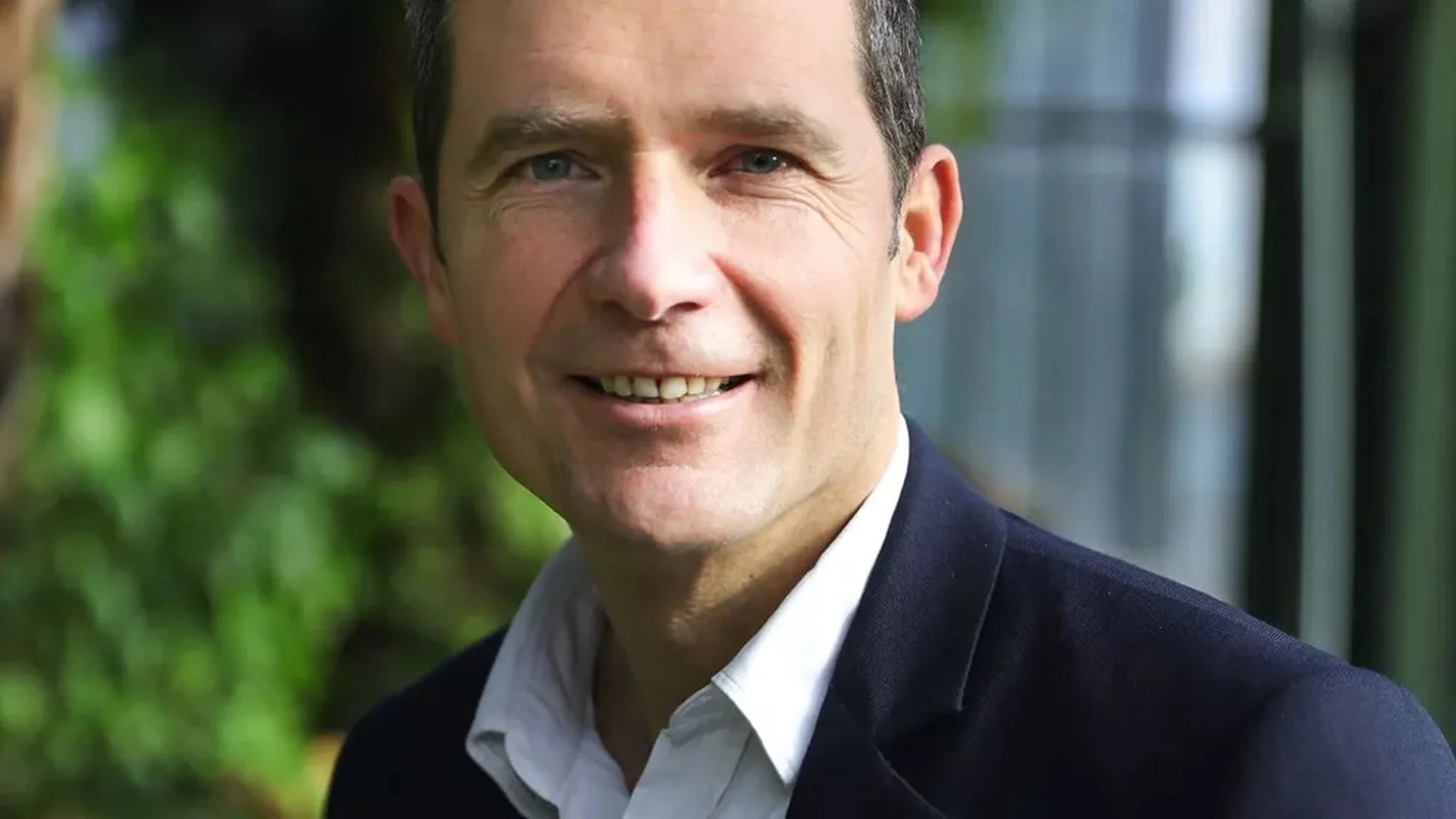
Many still think of agriculture as a question of yield. It has become a question of risk. In an increasingly unstable climate, neither technology, practices, nor genetics will suffice if the economic shock of the "white years" is borne solely by farmers, says Maximilien Rouer. This cellular biologist and plant physiologist by training, agro-engineer, knows the agricultural world from the inside. A former secretary general of Terrena, one of the largest French cooperatives, he has been working for over twenty-five years on the issues of climate adaptation, agricultural resilience, and risk coverage. Fiercely pro-tech, he nevertheless warns of a deadlock: in a world of increasing uncertainties, performance is no longer enough if the risk remains economically unsustainable for farmers.
There is much talk about adapting agriculture to climate change. In your opinion, is the subject being taken seriously enough?
It’s all a matter of amplitude and speed. Agriculture can adapt. But the ongoing climate evolution is such that, in living memory, nothing comparable has been known. Our cognitive capacities are overwhelmed by what is happening. We can project the present, a little better or a little worse, but we cannot imagine the rupture. And thus, we cannot prepare for it. There is a form of collective refusal to face obstacles.
Yet, climate is omnipresent in public and agricultural debate.
Just because we talk about it doesn’t mean we act at the right speed and at the right level. Sometimes, talking about it even gives the illusion that we are doing enough. The agro-industrial system has been built on near-constants, notably climate stability. However, this stability no longer exists. The climate is becoming highly unpredictable, and unpredictability is the worst enemy of the farmer.
What are the consequences of this climatic unpredictability on current agricultural systems and their performance?
When we are in unpredictability, we need systems that are primarily robust; performance is secondary: it becomes the result of this robustness. Photosynthesis is a good example. Its energy yield is very low, between 0.6 and 0.8%, but it is extremely robust. It withstands astonishing variations in temperature, sunlight, and humidity.
Plants are not green by chance. If they were strictly efficient, meaning with a good yield of energy transformation from sunlight into dry matter, they would be black. But they must survive under very variable conditions. Hence, they are green.
Does this mean that the quest for performance is a mistake?
Yes, if performance is a goal that excludes all others. No, if performance is the product of the robustness of the farm. An optimized system for stable conditions can collapse abruptly if those conditions change.
The same reasons that led to the success of a system can cause its near-disappearance. A system capable of producing 120 quintals per hectare can drop to 30 quintals under certain conditions. And without changing the approach, this will no longer be an exception.
“The same reasons that led to the success of a system can cause its near-disappearance.”
What role can technology play in this context?
Tech is essential. I am a pro-tech agro-engineer. But not all technologies are equal in this new context. We are no longer in the 1980s, in the illusion of a stable climate.
Between high-tech and low-tech, we need “just-tech,” which is adapted to extreme climatic conditions, energy-autonomous, and free from any geopolitical dependency. The real question is not only whether a technology increases yields, but also its contribution to maintaining production when conditions deteriorate.
“Between high-tech and low-tech, we need “just-tech,” adapted to extreme climatic conditions.”
Which technologies do you think are currently underutilized?
On one hand, we have an absolutely considerable and unprecedented capital of knowledge, particularly on genetics, soils, practices, inputs, the combination of chemical and organic, between animal and plant. We have an idea of what should be done to optimize yield and robustness, but it is only marginally implemented.
On the other hand, we still have, for most plots, a humic capital that allows us to continue producing, despite the massive decapitalization of organic matter in soils (and the microbiota that valorizes it).
Technologies that allow for the recapitalization of organic matter in soils are unfortunately still despised and neglected by most. For each soil and each production, there exists a chemical-organic optimum. It can be known by terroir, by country, by plot. But changing practices is complex, costly, and relies almost exclusively on the farmer.
Can technology alone secure the future of farms?
Another illusion. It’s so comfortable – but naive – to think so. Even with the best practices and technologies, climate change will cause white years. A white year is not a bad year; it is an economically unsustainable year. Like going from 100 to 30 quintals of wheat or from 90 to 25 tons of beets. These yields, once commonplace in post-war France, are no longer viable.
You often talk about “white years.” Why is this a central point in your reasoning?
A white year is not a moderately bad year. It is an economically unsustainable year. Going from 100 quintals to 30 quintals in wheat, for example.
It is central because the blind average calculation on the vulnerability of each farm to climate risk. A farm that would produce “on average” 70 quintals over 10 years can mask two years at 30 quintals. And who will bear this increasing risk? Neighbors may rejoice in the short term: in the dominant logic, this will allow them to expand at little cost. Then it will be their turn. How long will this deadly logic hold?
The unthought is that these white years will multiply. One year it will be Paul selling, the next year Jules, then Emma… In the end, everyone will go through it.
So, is it an economic and risk management problem before being a technical one?
Yes! Today, practice transformations are massively financed by the one with the weakest cash flow: the farmer. He can take risks. He is courageous and enterprising, and he does. But his financial capacity is quickly reached. And above all, “a scalded cat fears cold water” – eventually, he will give up. Indeed, under increasing climate pressure, technology alone will not suffice. The real issue is mutualization and risk coverage. Who will pay for the white years?
Agriculture benefits everyone: it is the basis of the creation of all wealth. Indeed, let’s push open a door that is unfortunately forgotten: it is the watershed that produces the drinking water essential for all downstream activities. Without water, no factories, no cities. And of course, no food.
The first beneficiaries of resilient agricultural practices are the 98% of the non-agricultural population.
What should be changed structurally?
We need to organize massive financing of this risk, on the order of 100 billion euros over 25 years, which, 80%, will not depend on the agricultural or agri-food world. It is not up to agriculture to finance its own survival alone. On one hand, because it does not have the means, and on the other hand, because the whole society depends on water, and everyone eats.
Either we collectively organize the economic and social protection of farmers, or we will have no more farmers.
“Either we collectively organize the economic and social protection of farmers,
or we will have no more farmers.”
In summary, what do you think is the true function of agricultural technology in the coming world?
Technology will not save agriculture, but it will make risk acceptable, insurable, and shareable. The protection of agriculture takes place at three levels, complementary and totally dependent:
– Make risk acceptable: adaptation (tech in the field). The acceptability of risk comes from its physical reduction. The less damage there is, the easier it is for the farmer and society to accept the risk. This will involve genetics adapted to new climatic conditions, precision agriculture (IoT & AI) to preserve natural resources, and agroecological or regenerative practices to enhance the resilience of plots.
– Make risk insurable: data (insurtech). A risk is insurable only if it is measurable. Until now, agriculture has lacked precise data by plot. Satellite imagery, parametric insurance, or a qualitative multi-risk climate (MRC) through high-quality calculation (cf. Agroclimat 2050) can provide this data. The risk can be fairly priced: those who have invested in hedges or regenerative hydrology will pay a lower premium. Society will support its agriculture knowingly.
– Make risk shareable: transparency (blockchain & ecosystems). Sharing risk implies, as I said earlier, that all beneficiaries of agriculture take their share. To enable this, (i) blockchain would facilitate solidarity, with “smart contracts” protocols to distribute losses within society. For example, if a drought strikes, part of the value can be automatically reallocated from beneficiaries (cities, industries, etc.) to producers via mutualization funds; (ii) the digital twinning (Digital Twins) of a farm would simulate disasters. This would help society as a whole to grasp the measure of risk, and thus support lenders (by proving the resilience of the farm) and help the state better target its funding.
We urgently need to organize the financing of agricultural risk by the non-agricultural economic world. And the good news is that current tech makes it possible.