Loading Bloom Agritech...

Subscribe to the newsletter
© 2026 Bloom Agritech. All rights reserved.
Loading Bloom Agritech...
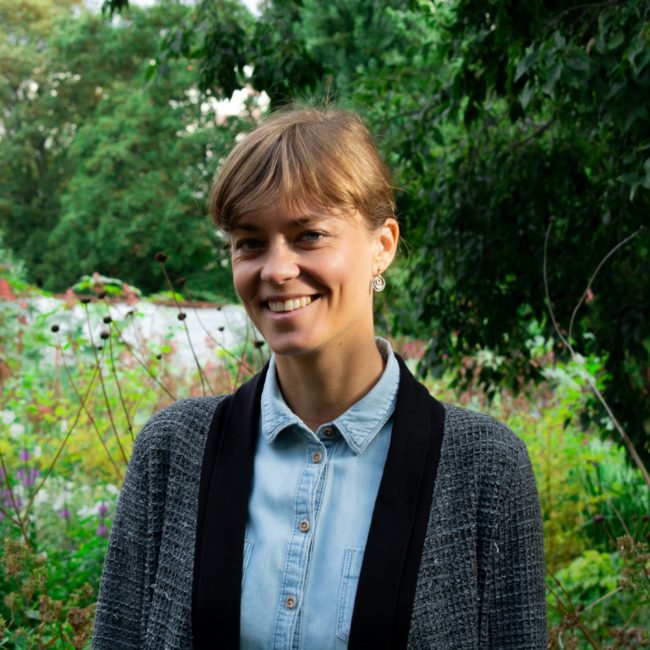
Anne Trombini, General Director of For a Living Agriculture (PADV) since 2018, is among the few personalities capable of bringing together around the same table actors who, until now, did not communicate: farmers, industries, scientists, financiers, and public actors. Under her leadership, For a Living Agriculture has become the trusted third party of agroecological transition, capable of proving through action that it can recreate value for all, sustainably.
You joined For a Living Agriculture shortly after its creation. Can you tell us about the origin of the association?
The idea was born in 2015 from an atypical collective: agronomists, chefs, entrepreneurs, and personalities from the agri-food sector, including Arnaud Daguin and Jean-Philippe Quérard. Their starting point was the link between soil health and the product we consume, with the aim of a more resilient agricultural model. I was recruited to lead this project precisely because of my external perspective, which gave me a neutral viewpoint and real freedom to question.
Has the vision evolved over the past seven years?
The way of working has evolved, but the vision remains the same: to regenerate soils for greater resilience and thus be able to continue feeding the population in the future. The association's actions aim to combat erosion, strengthen resilience to climate hazards, store carbon, produce biodiversity, and secure yields. These issues are more relevant than ever, confirming the project's pertinence.
Your role seems very transversal. How would you define it?
We are primarily creators of dialogue between sectors, from upstream to downstream. This neutral positioning has allowed us to become the trusted third party of the transition, notably thanks to the scientific robustness of our tools. Finally, we are very operational: our role is to deploy demonstrators, measure, observe, and provide the evidence needed to collectively build a new social contract for our agriculture.
How to engage farmers in this transition?
This is the major challenge. Awareness has progressed: 65 to 70% of farmers know they need to change their practices and are particularly motivated to do so. But they need a clear, secure model that is collectively supported. As long as the injunctions are contradictory—between clients, cooperatives, or the public sector—it is difficult to move forward. A minimum of common ground is necessary.
What do they concretely expect?
Three elements: technical support to help them progress sustainably; a solid economic model that pools investments and shares value equitably; and actors, both public and private, who commit to standing by them. Hence the importance of our pilot projects.
Your model has spread well beyond Hauts-de-France. How do you disseminate your methods and tools across the entire territory?
Hauts-de-France is our demonstrator territory, but our action is indeed national. Our members are agri-food actors spread across the entire territory, and thus their farmers as well. The agroecological sectors created cover a large part of the territory and different crops, from fruit growing to viticulture, including industrial crops and large-scale farming. We have also adapted the Regeneration Index to different crops, allowing us to have reliable data across all crops. Finally, the COVALO project also aims to deploy our vision and the territorial coalition model we advocate, across territories from Northern France to the Southwest.
What are the main obstacles today?
There are many obstacles, but they can be summarized as follows: all actors in the value chain must face contradictory challenges of mitigation, short-term, and adaptation, long-term. Farmers must choose complex technical pathways, technicians must acquire multiple skills to support them, sector actors must adapt their strategy and economic model... Moreover, contradictory injunctions are also present in public policy decisions; clarifying the framework would help define a clear and shared direction for all.
Do you feel recognized?
Our role as a trusted third party is widely endorsed within the ecosystem and reinforced by our democratic governance (1 member, 1 vote), our scientific council (validation of the robustness of the tools), our certifier (validation of the Regeneration approach)... all of which are compelling and essential elements that allow us to maintain neutrality to build collectively and serenely. Finally, the collective intelligence that drives us is an essential engine where everyone co-constructs, feels heard, and adheres to the projects, in service of the public interest: agroecological transition.
What do you need today?
Like any associative structure: more resources. But above all, to spread further. Our success will come from our ability to multiply demonstrators, create value for all, and inspire reproducible models... and we are working hard on this with the COVALO project, officially launched last week. After 18 months of work with 13 sector actors and two financial and public actors, we unveiled the technical support model for farmers as well as the economic support model. The goal: to pool investments and preserve yields to maintain the competitiveness of the sectors.
Can you present this unprecedented economic model?
The COVALO Hauts-de-France coalition is based on considering all the crops in the farmer's rotation, an essential condition to secure agronomic trajectories and develop a viable and competitive financing model for the sectors. An agroecological progress contract constructed with: additional agroecological premium: a guaranteed minimum amount of €100/hectare accessible as soon as an IR score of 40 or higher is reached, payments for environmental services with, for example, the first Regenerative PES funded by the Artois-Picardie Water Agency (Budget of €7 million), and a “Transition+” banking offer supported by Crédit Agricole Nord de France that converts the environmental performance of farms into adapted banking and insurance offers.
And what about the future?
The various territorial coalitions that already bring together more than 50 public and private actors will develop across the territories, and particularly for Hauts-de-France, the recruitment of farmers is underway. There is no doubt that 2026 will see major advances for each of them!