Loading Bloom Agritech...

Subscribe to the newsletter
© 2026 Bloom Agritech. All rights reserved.
Loading Bloom Agritech...
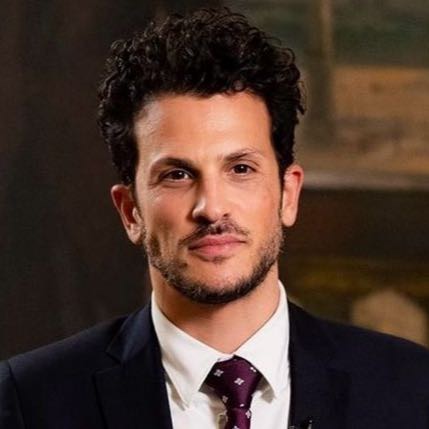
Fabien Koutchekian, founder of Genomines, launched the company to provide industries with an alternative solution to natural nickel deposits, which are now fragile. His startup is developing a bioextraction process without mining and without emissions, designed to produce low-carbon nickel. This approach makes perfect sense in a market dominated by a few key players: in 2024, Indonesia produced about 2.2 million tons of nickel, accounting for more than half of global production, according to the Investing News Network. This ranks the Philippines as the second-largest producer, with about 330,000 tons, followed by Russia, with around 210,000 tons. New Caledonia, often cited among the world's top nickel producers, actually ranks around 6th or 7th place, reflecting a decline in its production.
This extreme concentration exposes the sector to geopolitical risks, unstable price dynamics, and a high carbon footprint. In this landscape, Genomines is betting on European, local, and sustainable production — an asset for industries looking to secure their supply while reducing their environmental impact.
1. What are the main factors that made this fundraising more difficult than the previous one?
This fundraising proved to be more complex for several reasons. First, our positioning in climate tech exposes us to a sector that has become less attractive to investors, partly due to recent failures and projects lacking economic performance. Next, we are dealing with a commodity — nickel — whose prices are sustainably driven down by an overconcentration of production in Asia. This creates a bias on potential profitability. Finally, the due diligence process was longer and more demanding, especially since we were seeking a larger amount in a generally tight market.
2. How has the approach of investors evolved, particularly regarding due diligence?
It has clearly changed. We have observed a much longer, more technical, and detailed due diligence process. Some aspects sometimes bordered on the "ridiculous" given the high level of demand, which extends timelines and slows down transactions. Investors now want to verify every assumption, every technical and economic parameter, before considering a commitment.
3. What is the current situation for technology companies operating in the climate sector, and what are the key elements for success?
The situation is "very, very complicated." Investors are no longer satisfied with potential or promises: they demand extremely solid fundamentals, proven technology, customers, contracts, demonstrated economic viability, and a favorable regulatory framework. Many companies are failing today due to a lack of these proofs. In this context, one must come with an impeccable file and a model capable of surviving in a very selective market.