Loading Bloom Agritech...

Subscribe to the newsletter
© 2026 Bloom Agritech. All rights reserved.
Loading Bloom Agritech...
Across Europe, agricultural policies face the same equation: how to reduce pesticide use while preserving food sovereignty and the competitiveness of sectors? In the Netherlands, phytosanitary restrictions are causing tensions, in Germany the gradual ban on glyphosate is divisive, while in Spain and Italy producers are warning about competition from third countries using molecules banned in the European Union. In France, these debates take on a particular significance: the country often applies stricter standards than its neighbors, reviving concerns about European fairness and the competitiveness of sectors. More broadly, these regulatory divergences weaken Europe's ability to maintain its food sovereignty against less constrained and increasingly aggressive international competitors.
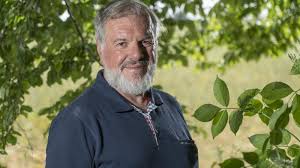
To shed light on these issues, we interviewed André Fougeroux, a member of the French Academy of Agriculture and a beekeeper, who is a keen observer of changes in the agricultural world.
In light of these European debates on pesticides, let us ask ourselves the right questions today for the future of our agriculture and food sovereignty?
These controversies, particularly those surrounding acetamiprid or the "megabassines" we had in France during the examination of the Duplomb law, have the merit of bringing fundamental issues to the table: what type of agriculture do we want? What food sovereignty for France and Europe? The COVID crisis and the war in Ukraine have revealed our dependence on imports, sometimes exceeding 50% for certain agricultural sectors, such as fruits and vegetables. This is a strategic vulnerability. This law has contributed to reopening the discussion, and the answers remain to be built.
Why does this subject provoke such a political fracture in France?
Because it touches on the agricultural model itself. In the Assembly, the votes reflect a clear divide: the left rejects what it perceives as a return to productivism, while the right supports an agriculture deemed more competitive.
In the agricultural world too, opinions differ. Some producers, particularly in large-scale crops, can no longer bear the accumulation of standards. Others, on the contrary, refuse the reintroduction of controversial molecules. In reality, the law reveals a much broader ideological divide: do we want intensive and competitive agriculture or a more environmentally friendly agriculture that is less productive and requires food imports? Is there a third way?
« There is no single solution, but a bouquet of innovations. »
What do farmers on the ground say?
Their testimonies show contrasting situations. For instance, sugar beet growers had a very difficult time in 2020, marked by a severe yellows virus attack that destroyed up to 50% of their harvests, while their German or Belgian neighbors had access to solutions banned in France. Producers of prunes or hazelnuts face competition from Chile, the United States, or Turkey without having the same protective tools. In the Southwest, some had to uproot thousands of hectares of plum trees due to lack of profitability.
These examples fuel a sense of injustice towards Europe: "Why do our neighbors have access to products that are banned for us?". But not everyone shares this view: some small producers prefer to advocate for a more sustainable agriculture, even if it means accepting a decline in competitiveness.
Can we summarize the opposition as a divide between "large" and "small" farmers?
No, it is not a division between rich and poor. There are small producers in favor of the law, in the name of European justice, like this Alsatian farmer who operates plots on both sides of the Rhine, with different rules depending on which side of the border.
The divide is mainly ideological and territorial: relating to standards, competition, and the vision of agricultural future, as well as the acceptance of new technologies.
What scientific solutions do you see for the agriculture of tomorrow?
There is no single solution, but a bouquet of innovations: disrupting communication between insects and plants rather than destroying them, enhancing agricultural machinery for mechanical weeding, mobilizing the microbiome (bacteria and fungi that protect crops), and diversifying crops to limit risks.
Agroecology has a role, but it is not a miracle recipe. We often forget that our grandparents already practiced a form of agroecology and still suffered significant pest damage. In any case, we must keep fallback solutions, even as a last resort, to prevent a farmer from seeing their harvests destroyed without being able to act.
Should we move towards larger farms?
The average size of French farms is around 70 hectares, far from the thousands of hectares in the United States or Brazil. Certainly, some farms exceed 1,000 hectares, but this is not the majority.
The real issue lies elsewhere: diversification. Some sectors are very specialized, like tomato greenhouses, where investments and technicality prevent any diversification. But other farmers are introducing new crops (aromatic plants, legumes, etc.) to adapt.
And what about the future of livestock farming?
This is an explosive subject. In France, meat consumption is declining, particularly among young urbanites, who are sensitive to animal welfare arguments. Internationally, the opposite is true: demand is exploding, especially in Asia. French sectors are weakened by this contradiction. However, livestock remains essential, if only for organic fertilization. Without livestock, many organic farms struggle to maintain soil fertility. Therefore, we need to find a new balance and, undoubtedly, rethink public support for farmers.
« It is urgent to organize a Grenelle of agriculture and food,
to collectively define what society expects from its farmers, and at what price. »
How do you see the future by 2050?
I distinguish two main axes. On one hand, energy autonomy. If farms produced their own energy through photovoltaics, methanization, and then hydrogen, it would eliminate an average bill of €12,000 per year in fossil energy. On the other hand, autonomy in fertilization. Today, 25% of our fertilizers come from Russia or Belarus. The supply of organic fertilizers is insufficient and decreasing with the decline in livestock. We need to innovate, for example, by producing nitrogen from electricity, air, and water. These two areas are crucial for making agriculture more resilient.
What "contract" between society and farmers?
This is the central question. After World War II, the mission of agriculture was clear: to fill the plates of the French. This goal was achieved in the 1970s with food self-sufficiency. Today, expectations are more vague: some want organic, local, small farms; others prioritize price. Farmers are lost in the face of these contradictory demands and suffer from a lack of recognition. As a result, few young people take over farms, exacerbating the renewal crisis.
It is urgent to organize a Grenelle of agriculture and food, to collectively define what society expects from its farmers, and at what price.
Sooner or later, we will have to collectively answer this question, otherwise European food sovereignty will remain a distant horizon.
Should this food sovereignty be a strategic objective?
Yes, without ambiguity. Europe has the soils, climates, and know-how necessary. Not aiming for food autonomy would be a strategic mistake, especially since other regions of the world will not be able to guarantee it either. Food sovereignty must become a strategic pillar again, alongside the environment. This rebalancing has already begun in the new French agricultural orientation law.