Loading Bloom Agritech...

Subscribe to the newsletter
© 2026 Bloom Agritech. All rights reserved.
Loading Bloom Agritech...
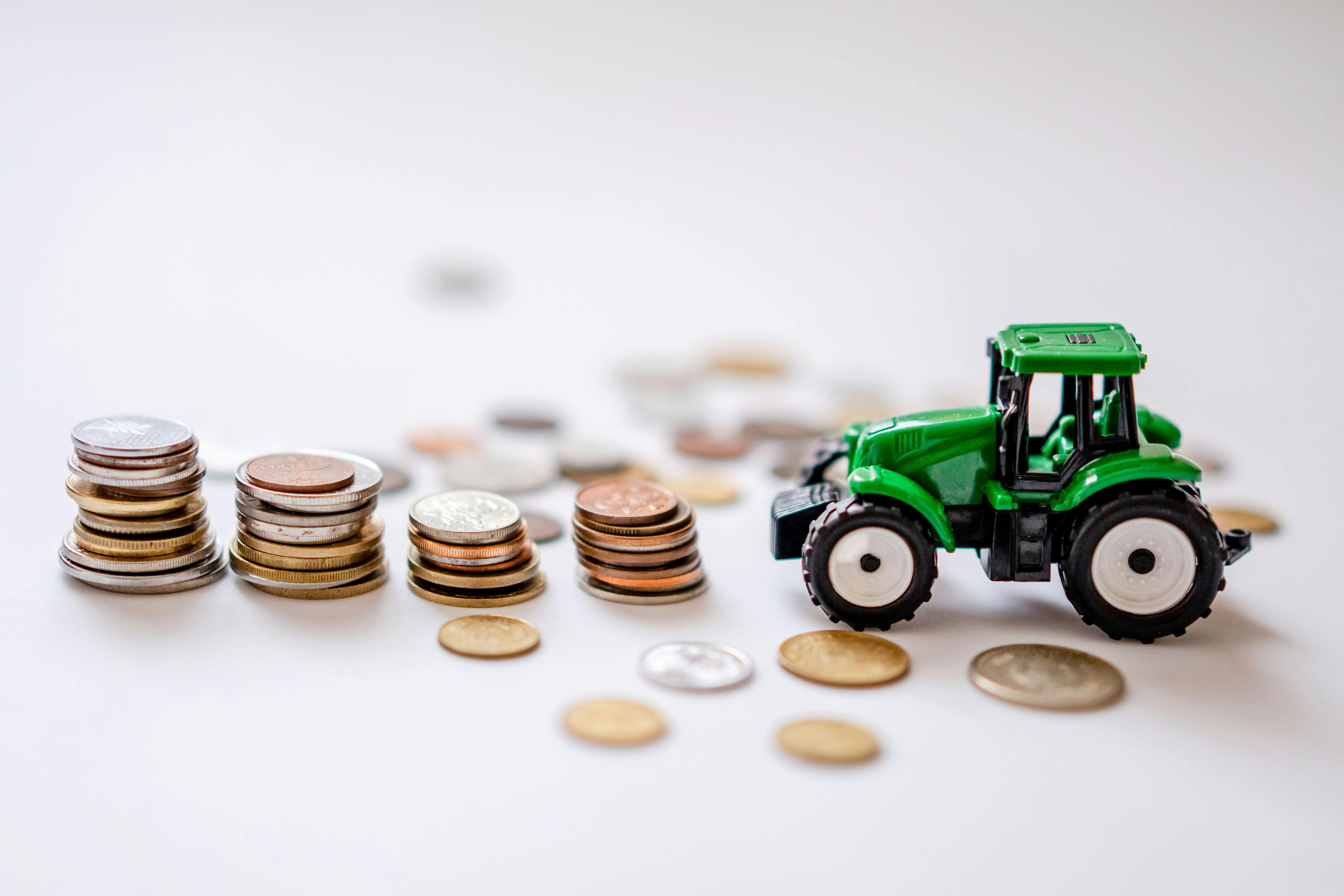
Monday, April 13, Brussels. About forty stakeholders are gathered to discuss the rise in fertilizer prices since the beginning of the war in the Middle East. The price of nitrogen surged by 20% between February and March 2026. Fertilizers Europe, Copa-Cogeca, Farm Europe... for some of these European lobbyists, the solution should be quick and lies in an immediate reduction of taxes. Others see a long-term solution in the new European carbon certification mechanism: the CRCF.
Farmers caught in a bind
Cédric Benoist, a French cereal farmer and chairman of the Cereal Working Group at Copa-Cogeca, advocates for a short-term solution. He calls for the reduction of certain taxes such as the Carbon Border Adjustment Mechanism (CBAM). Implemented in January 2026, the CBAM taxes fertilizers to subject them to a carbon pricing equivalent to that applied to European industries. "We are stuck at the agricultural level, farmers are caught in a bind," he worries.
At the end of the chain, they have no choice but to pay the high price. He estimates that all the tariff barriers put in place at the European level add "120 to 130 euros" to the purchase price of a ton of fertilizer. And the solution of resorting to green fertilizers, advocated by Europe, is not economically viable either. As a result, whether it is carbon-based or green fertilizers, right now to procure them, "you already need to have the cash," he points out.
Pervasive effects that do not trigger transitions
From the perspective of the think tank Farm Europe, it is a sustainable solution that will save farmers. According to Luc Vernet, a specialist in European regulation and a member of Farm Europe, the European strategy, which aims to promote the production of green fertilizers, particularly through taxation mechanisms like the CBAM and the EU ETS (European Union Emissions Trading System), is not the right one.
"We are in a scheme where we have transition mechanisms that have perverse effects and do not trigger transitions. The question is to break out of this vicious circle (…) to return to a scheme where we have the capacity to make transitions, but we know very well that transitions only exist when there is room to make them,” he explains.
Empowering farmers as active participants, not mere spectators
For him, Europe must first and foremost set a course: "I believe that the direction towards reducing emissions is the right one. But we must provide farmers with the financing tools for these transitions without constraining them on the solution itself. Without telling them: you will produce green hydrogen, which will replace your current fertilizers.” This will encourage innovation and "allow them to freely choose how to reduce their emissions and then sell emission reductions on carbon markets.” A way to make them active participants rather than mere spectators in their carbon transition.
A solution that could, at least in part, satisfy cereal farmers like Cédric Benoist, who finds the offer of green fertilizers ineffective as long as no solution exists to "massify renewable energies.” Demand is currently nonexistent on the farmers' side, facing a selling price three times higher than that of fossil fertilizers.
What is the CRCF, Carbon Absorption Certification Framework?
A new European mechanism designed to reliably certify the quantities of CO₂ actually removed from the atmosphere, notably through agriculture, but also through forest management. Once established, the CRCF will validate permanent carbon absorptions and emission reductions in soils generated by carbon farming, industrial technologies that capture CO₂, and sustainable carbon storage in products (construction wood, bio-based materials…). Voluntary farmers will be able to generate certified carbon credits that are tradable on carbon markets if they can demonstrate real, additional (beyond what would be absorbed without the project) and verified absorption. The basic text of the CRCF was adopted in 2025. Certification methodologies by sector are being developed. Those concerning agriculture are to be discussed during the summer of 2026, and the first projects should be submitted by the end of 2026.